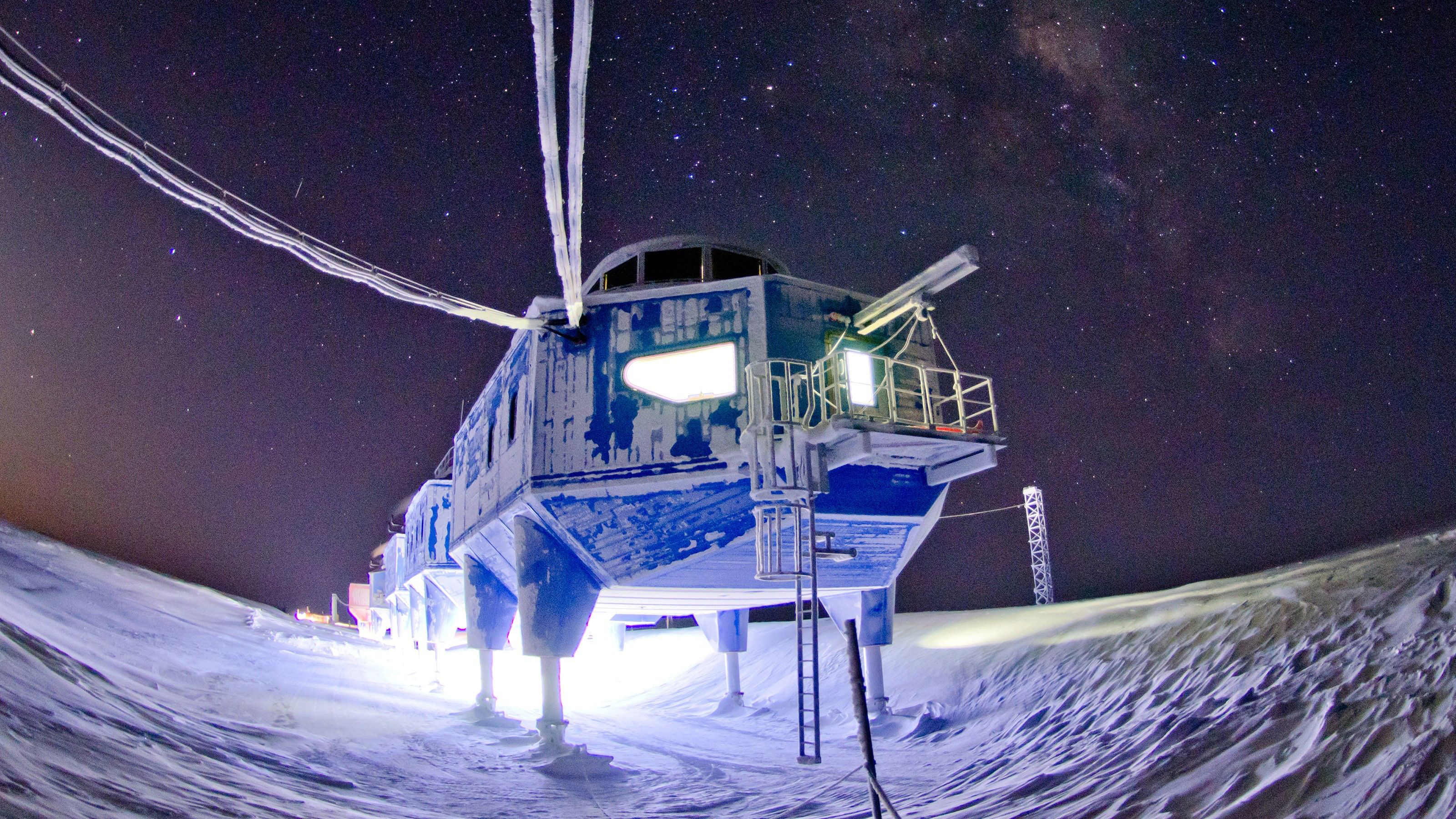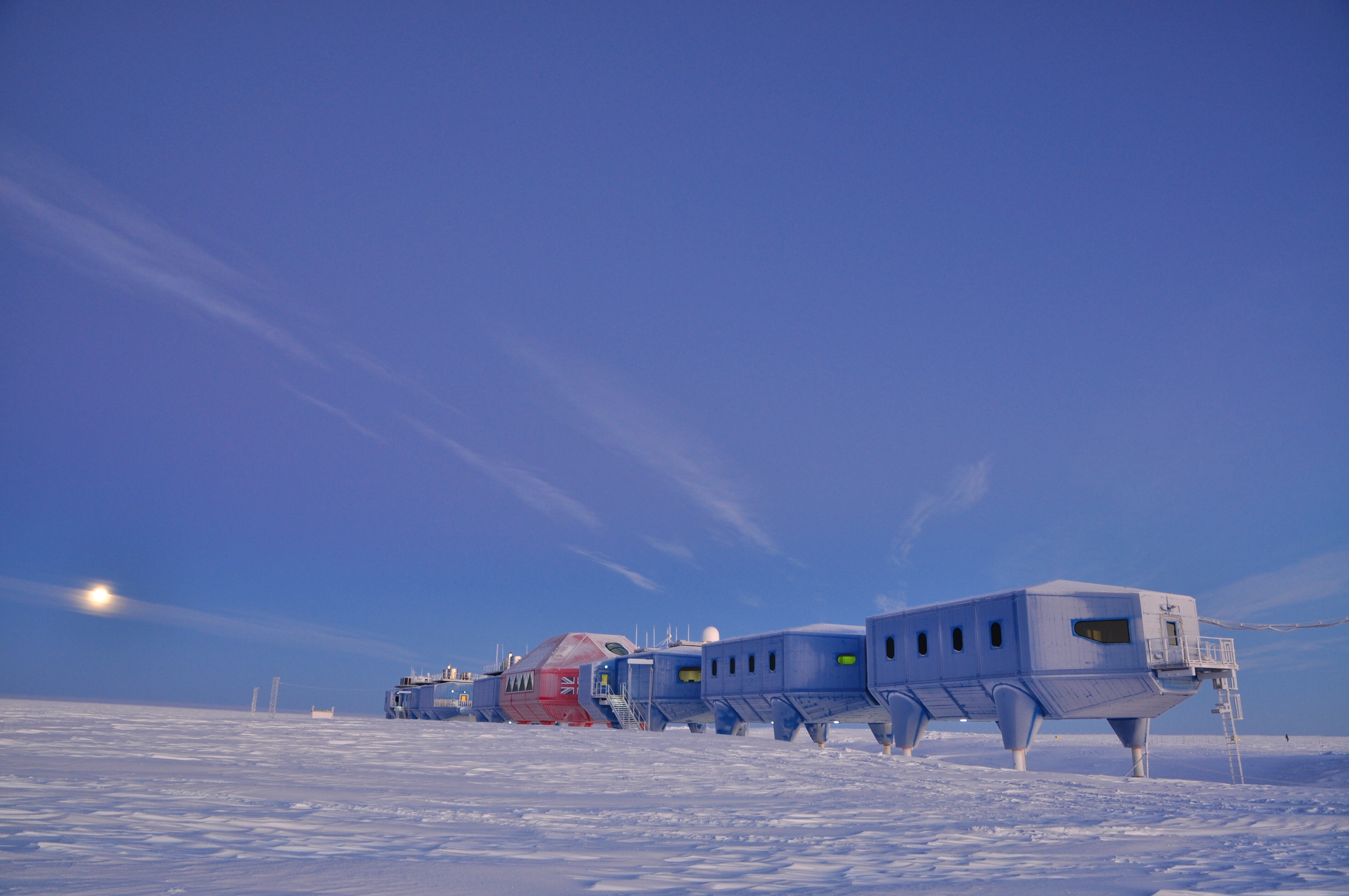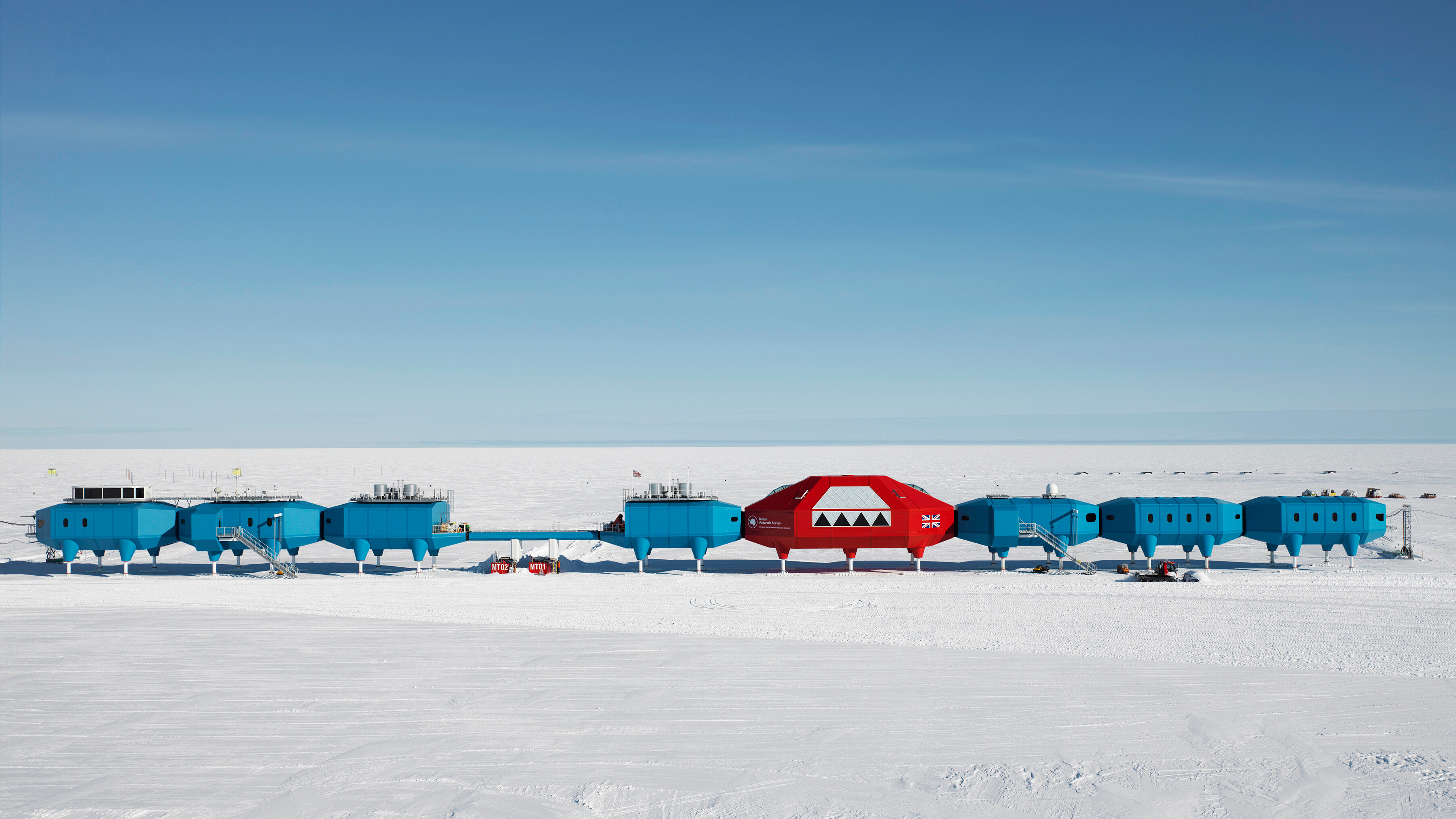
The British Antarctic Research Station at Halley is located on the Brunt Ice Shelf, which is creeping out to sea at a rate of 400m per year. In 2004 the British Antarctic Survey (BAS) launched an international competition for the replacement of Halley V, which was reaching the end of its life and was locked into the ice. In 2005 the competition for Halley VI was won by Hugh Broughton Architects and AECOM, whose pioneering, modular design revolutionises construction, delivery, and relocation. It opened in 2013.
The world’s most southerly research stations, which are vital for gathering environmental and climate data, occupy the harshest climate on earth. At Halley snow levels rise by 1m every year, temperatures drop to -56˚C and winds blow in excess of 160 km/h.
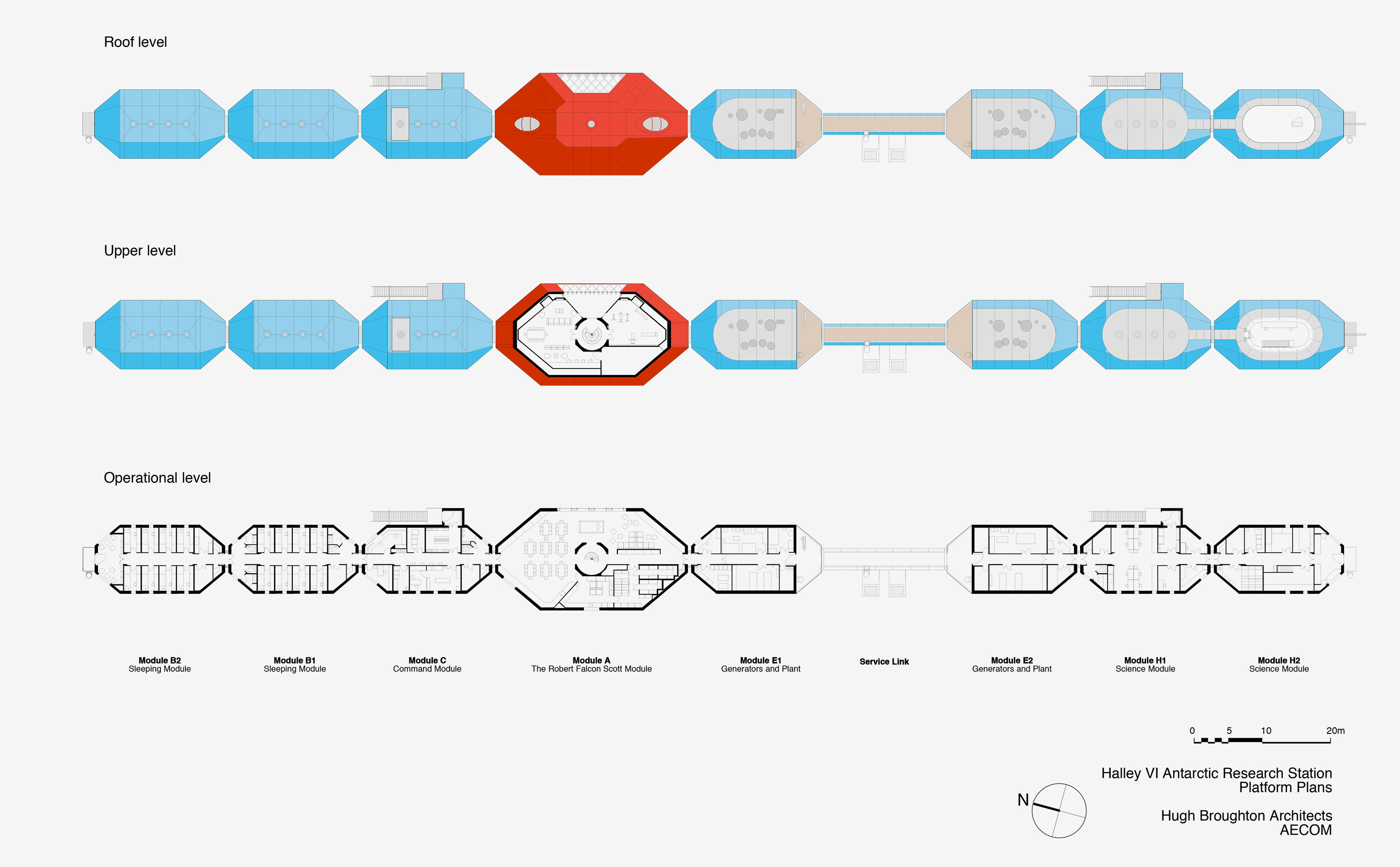
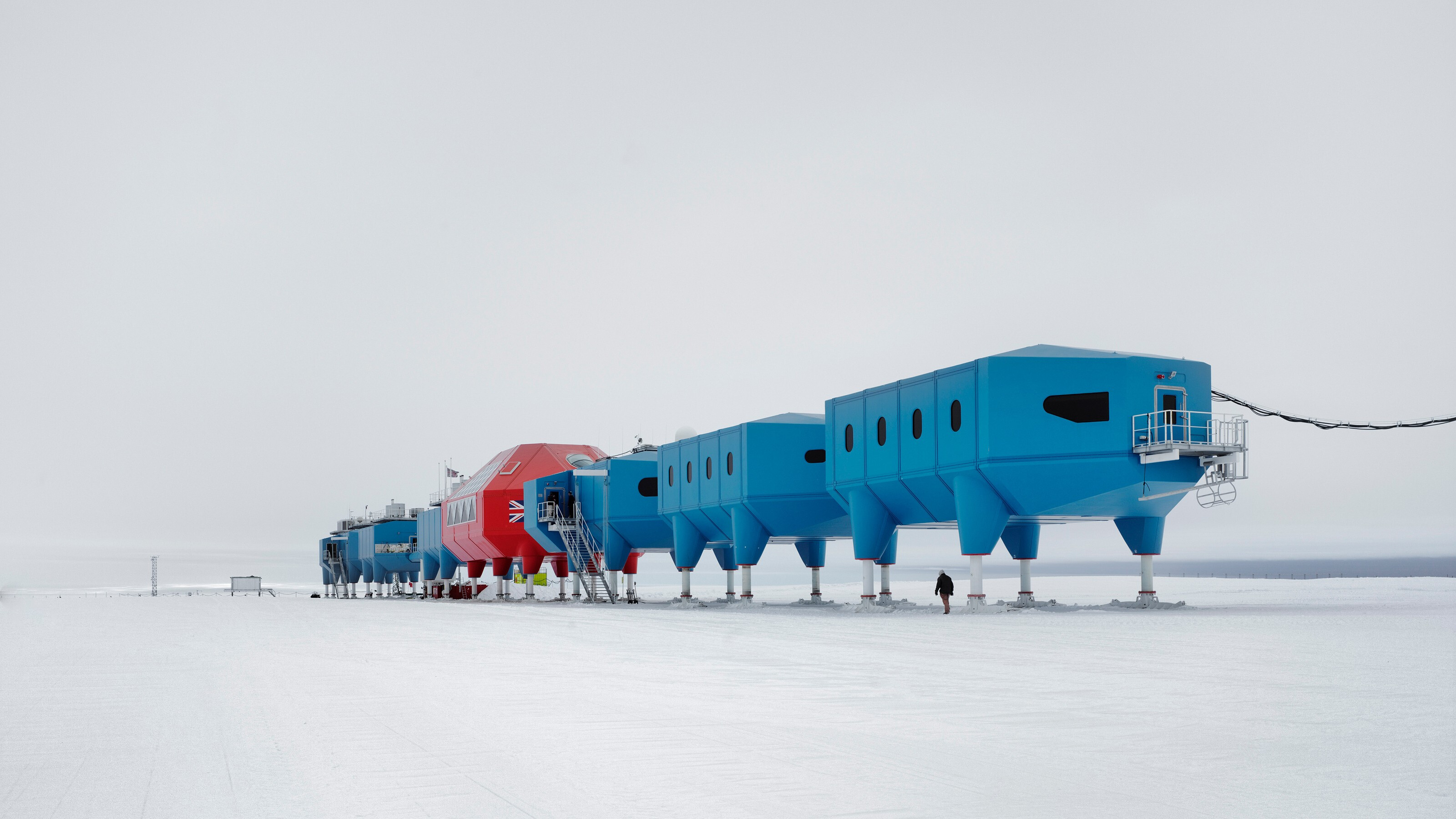
Our design responds to this extreme environment and places robust and interchangeable 10m x 20m modules in a straight line perpendicular to the prevailing wind. In this arrangement the wind accelerates under the modules leaving snow to drift away the leeward side, leaving the windward side free for pedestrian and vehicular movements.
-dave-southwood_mock-up-module-seen-against-table-mountain.jpg)
-bas_mod-a-being-towed-to-z6-site-(rear-elevation).jpg)
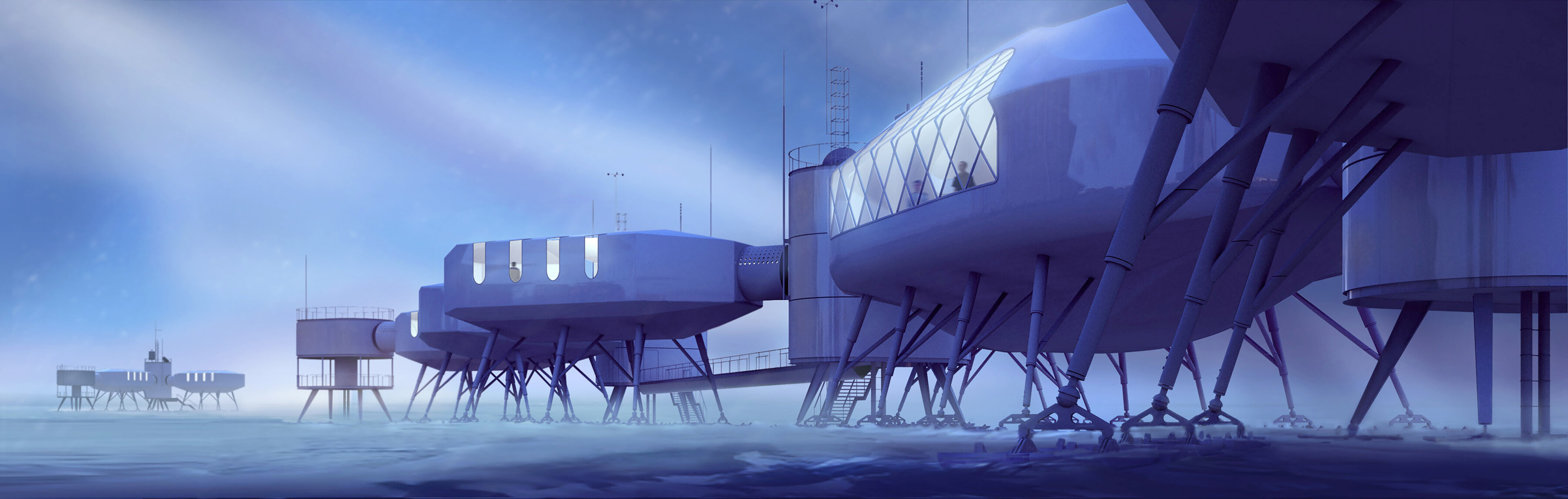
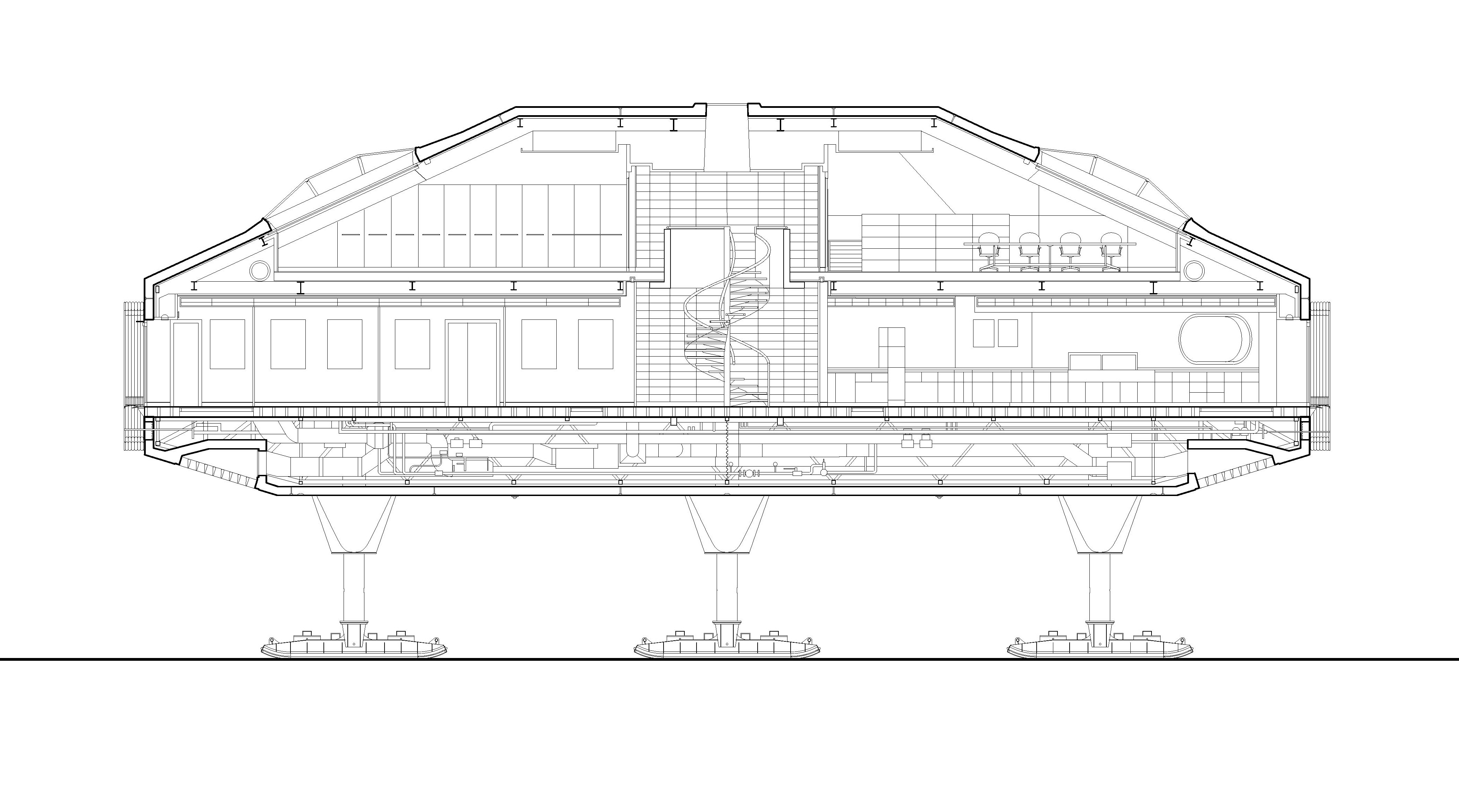
Each module is supported on giant steel skis with hydraulically driven legs, allowing the station to mechanically ‘climb’ out of the snow every year. As the ice shelf moves out towards the ocean, the modules can be lowered and towed by bulldozers inland.
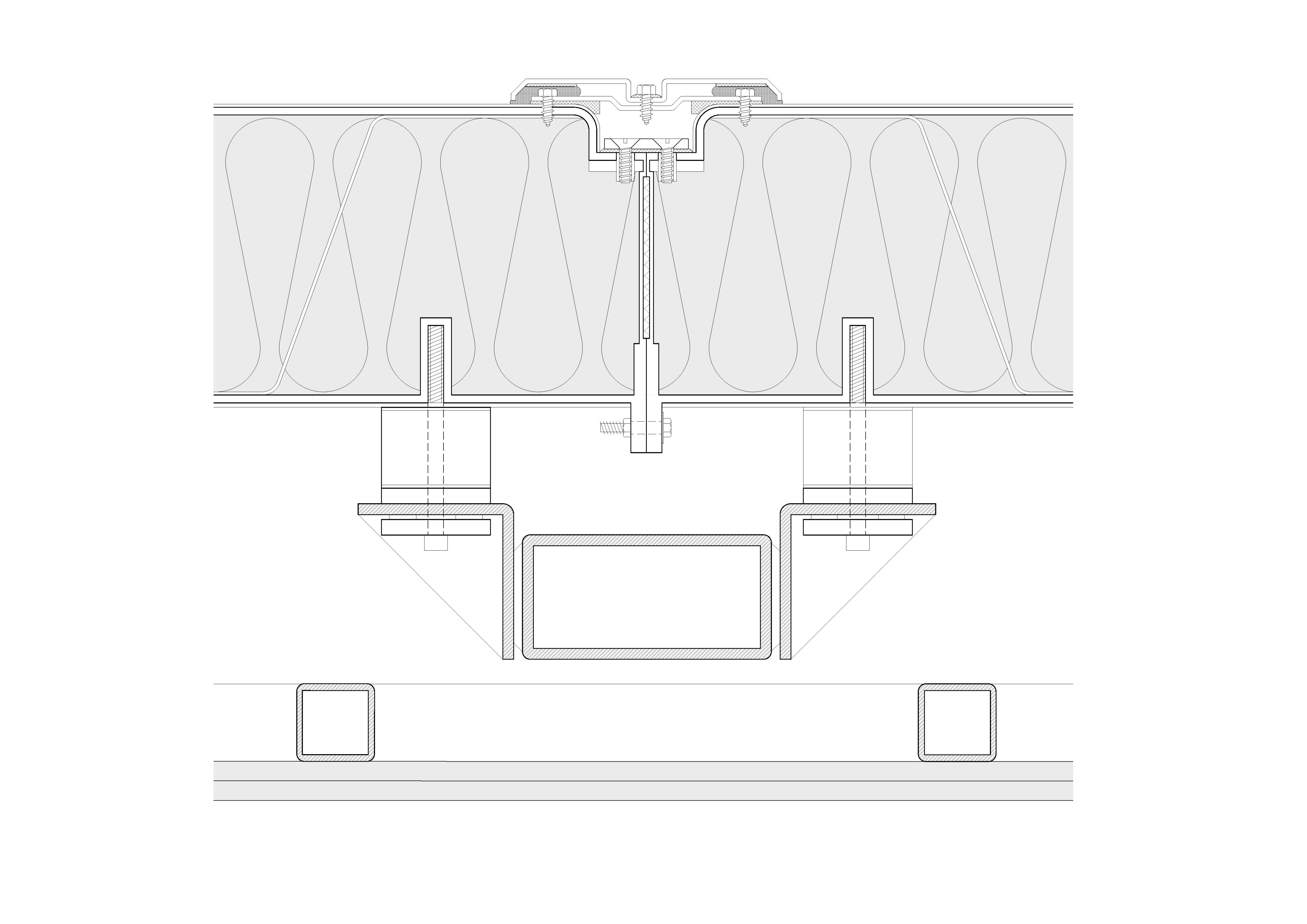
The modules are constructed with steel frames and clad in highly insulated composite GRP panels. Prefabrication of structure, cladding, rooms and services was maximised, to speed up delivery and construction, as access by ship and plane is limited to a three-month summer window. The products were sourced from all over the world with the centre of pre-construction activities in South Africa, where a full-scale trial erection of modules was undertaken prior to shipping to Antarctica.
The modules were erected over three 12-week summer seasons using a factory line approach at Halley V, where the construction crew was based. Once fully clad, the modules were successfully moved 15 km inland to the Halley VI site where the interiors were completed in a final fourth construction season.
-andy-cheatle_cladding-standard-module-february-2008.jpg)
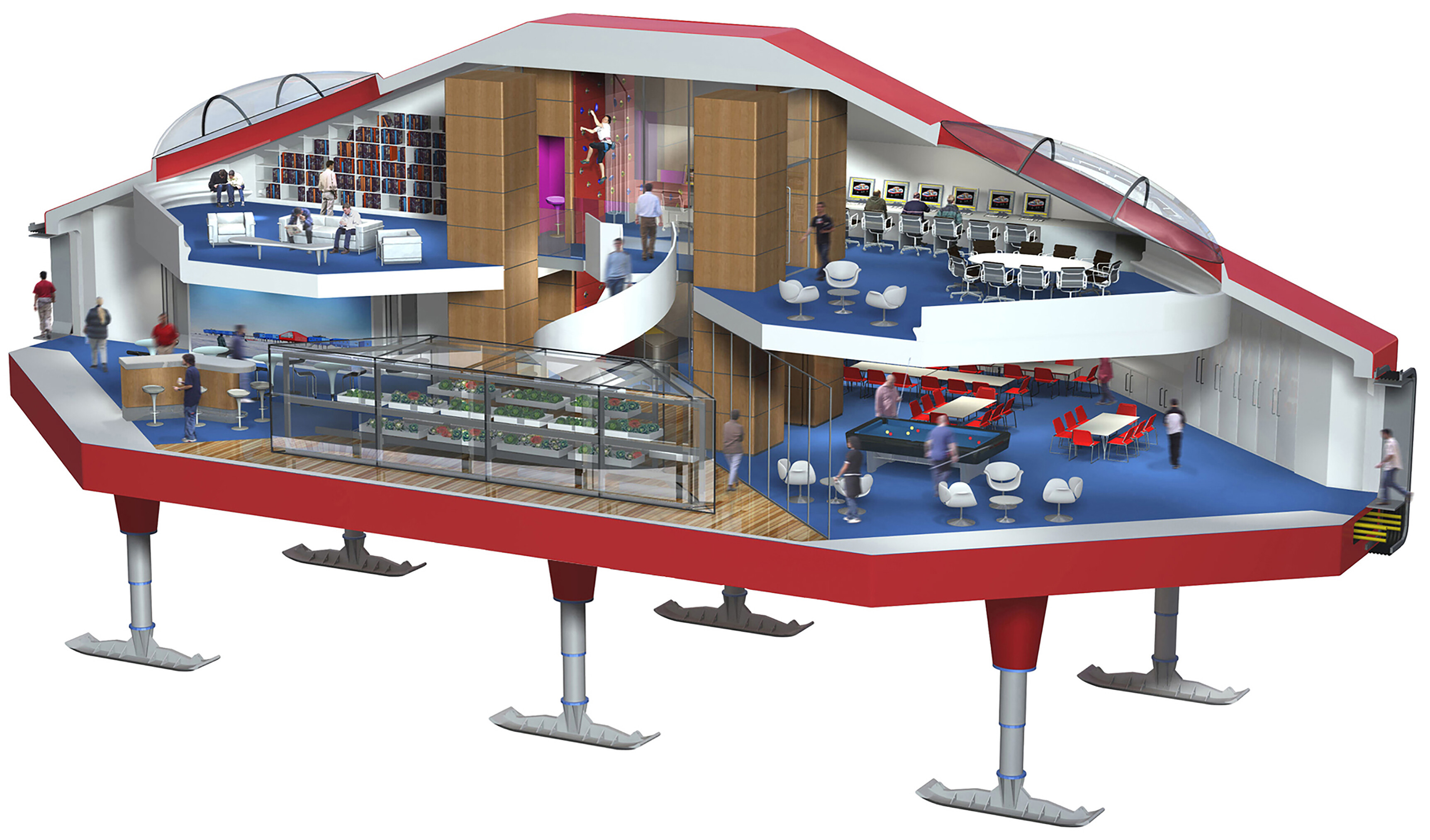
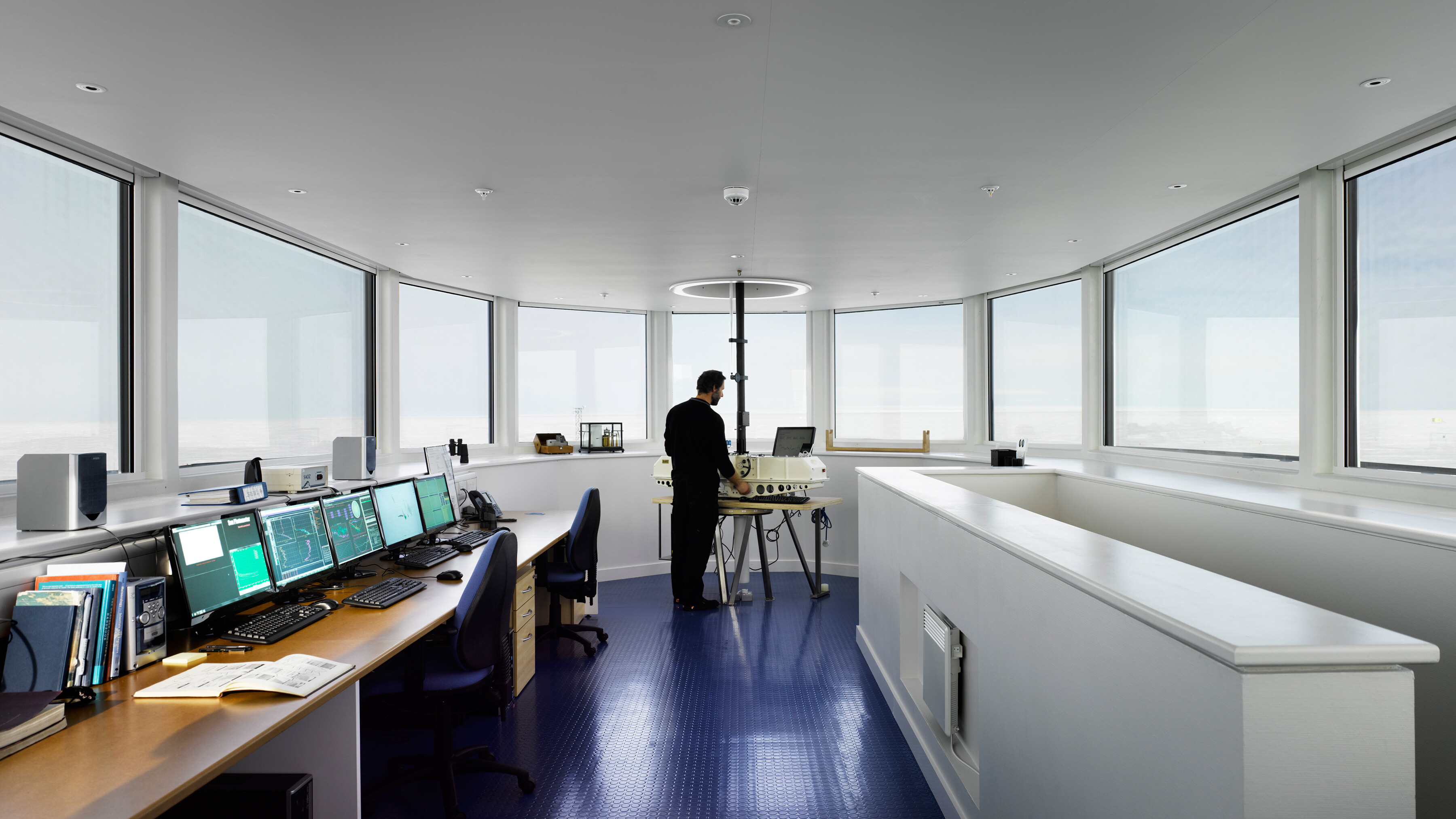
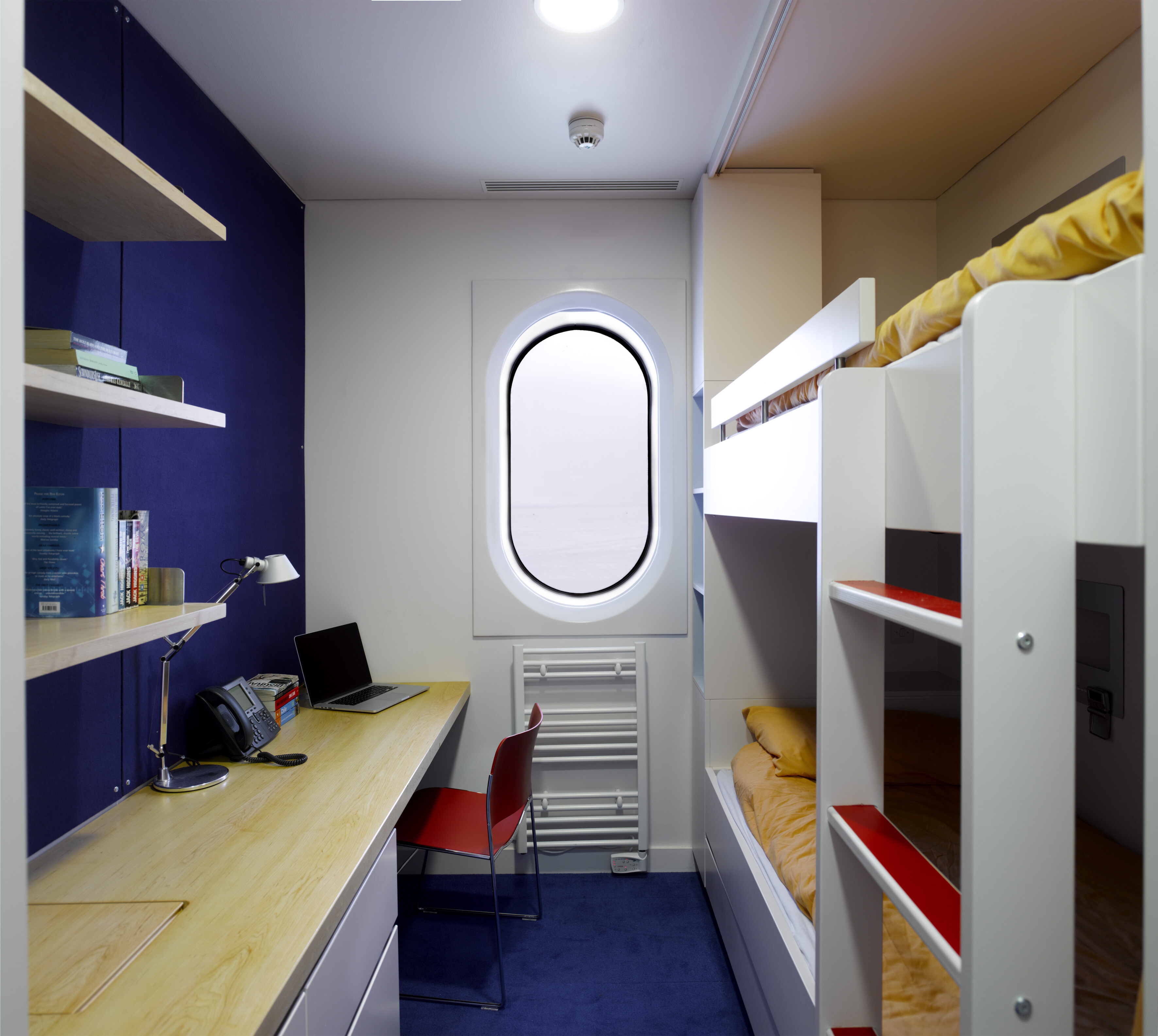
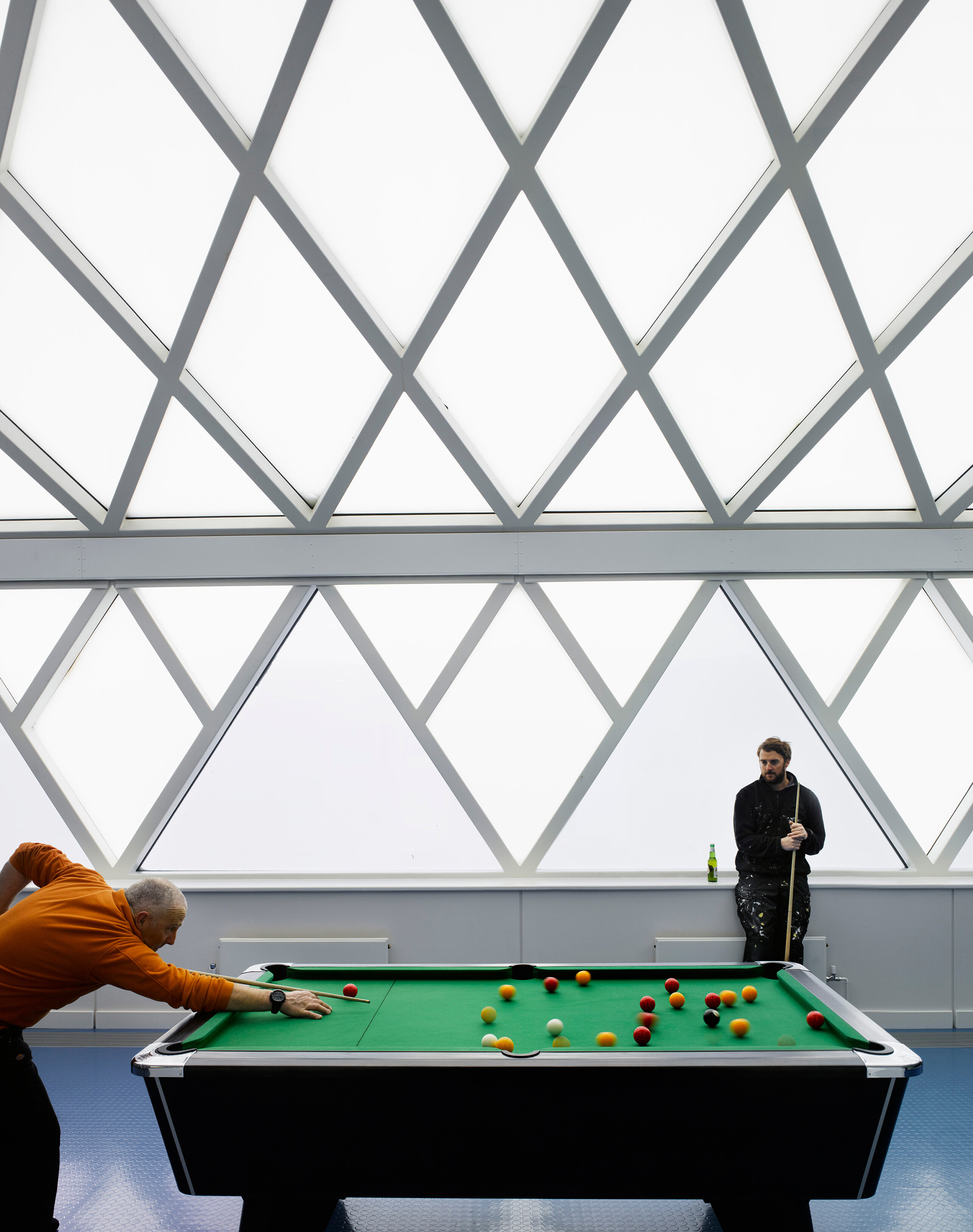
Designed for maximum resilience and adaptability, the modules are multi-functional and can be used for research, residential or operational purposes. A red, two-storey central social module that is twice the size of the blue modules offers a comfortable and attractive environment for living, dining and recreation. The base is effectively split into two, each half having its own energy centre to ensure self-sufficiency in case of emergency. A bridge link allows sharing of power, drainage and water.
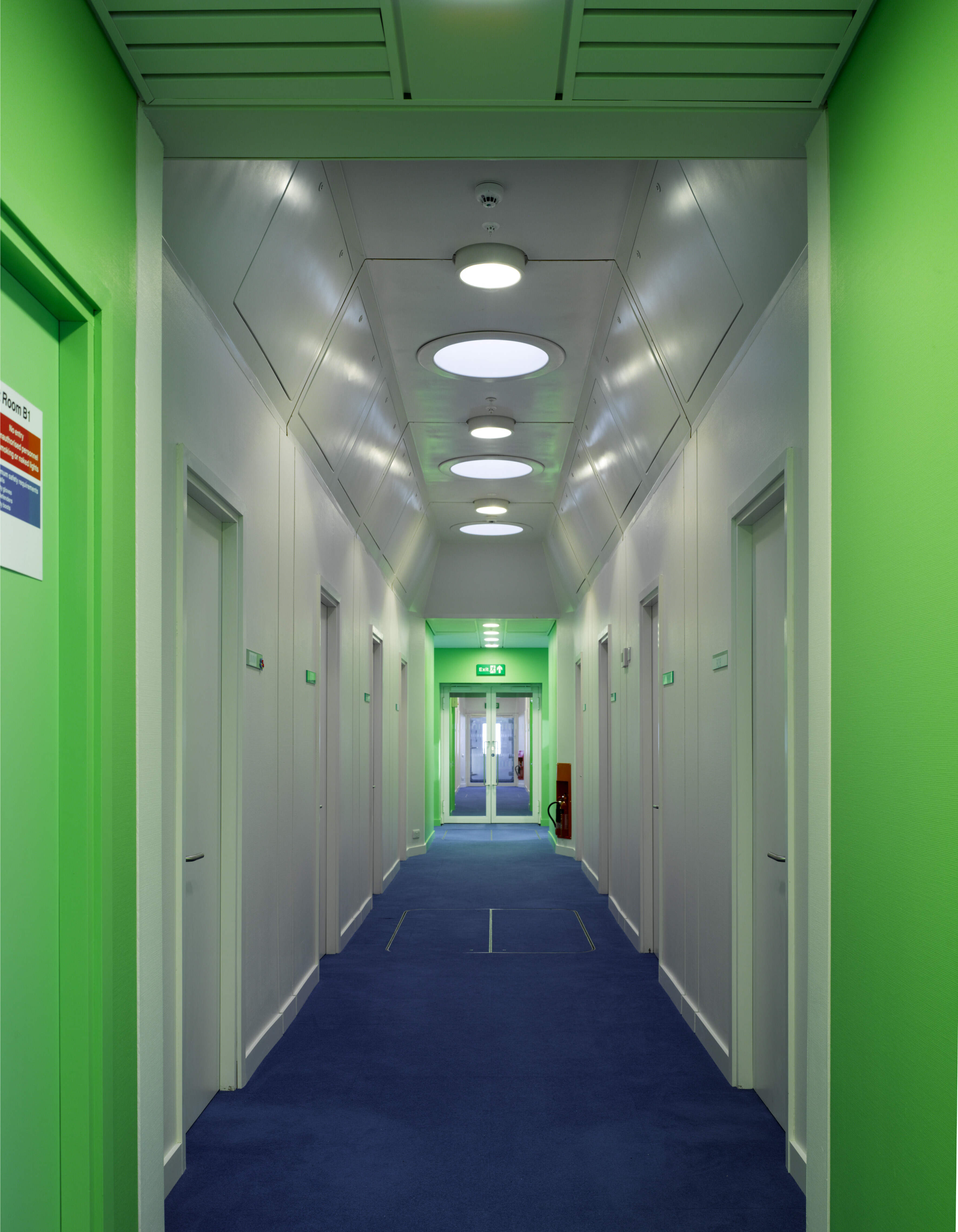
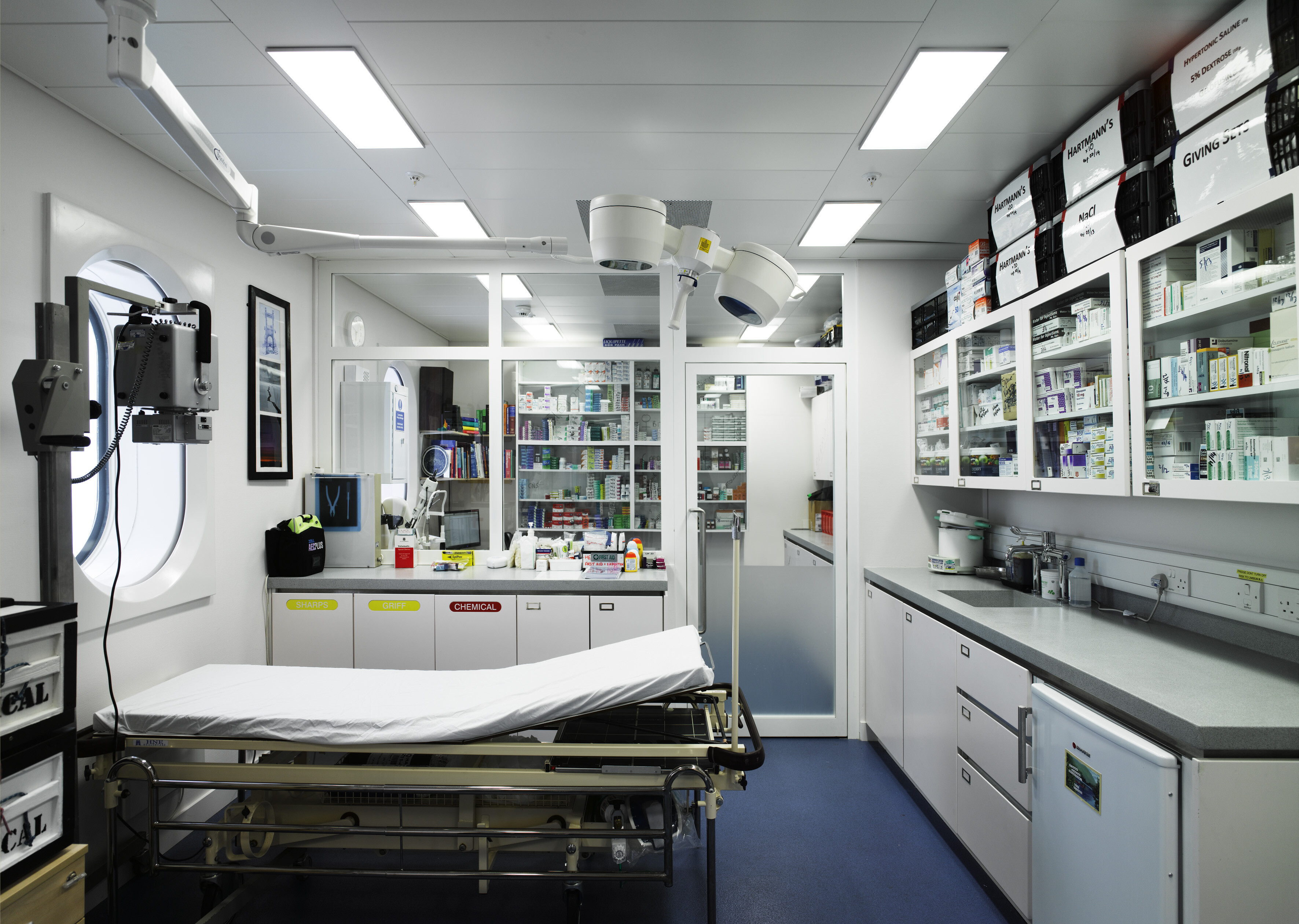
Inspiring interior design provides an uplifting environment to sustain the crew through the long dark winters, helping to combat the debilitating influence of Seasonal Affected Disorder. Halley VI incorporates medical operating facilities, air traffic control systems and CHP power plants and is a microscopic self-supporting infrastructure-free community.
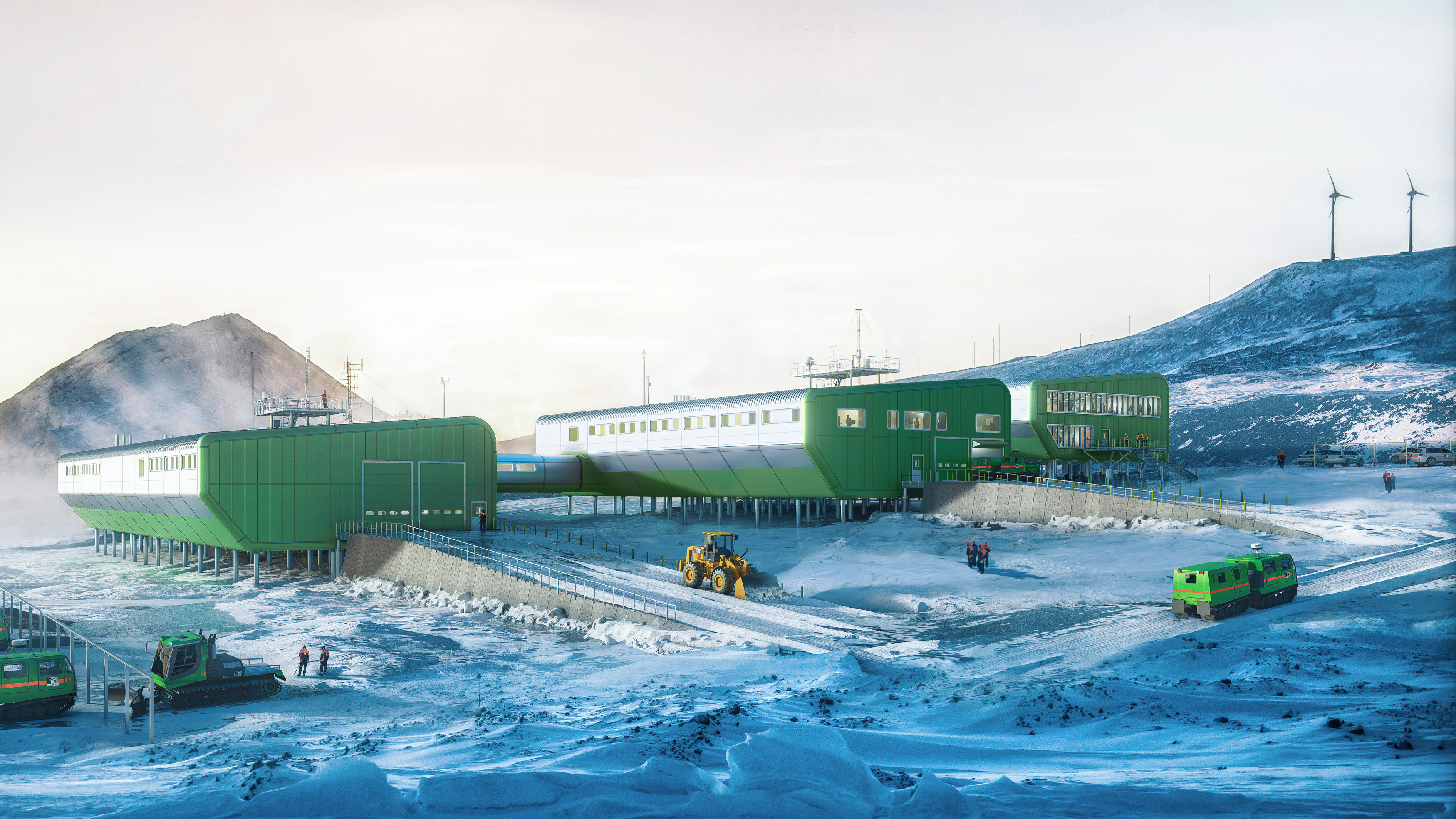
The impact of Halley VI has been remarkable: it has established a new architecture for Antarctica and all the stations that have followed have in some way paid homage to its design. As a result we have been awarded major projects in the field, including the master planning of the Australian Antarctic Division’s three research stations in East Antarctica.