-roger-m-stevens-arps-(5)-1713783420.jpg)
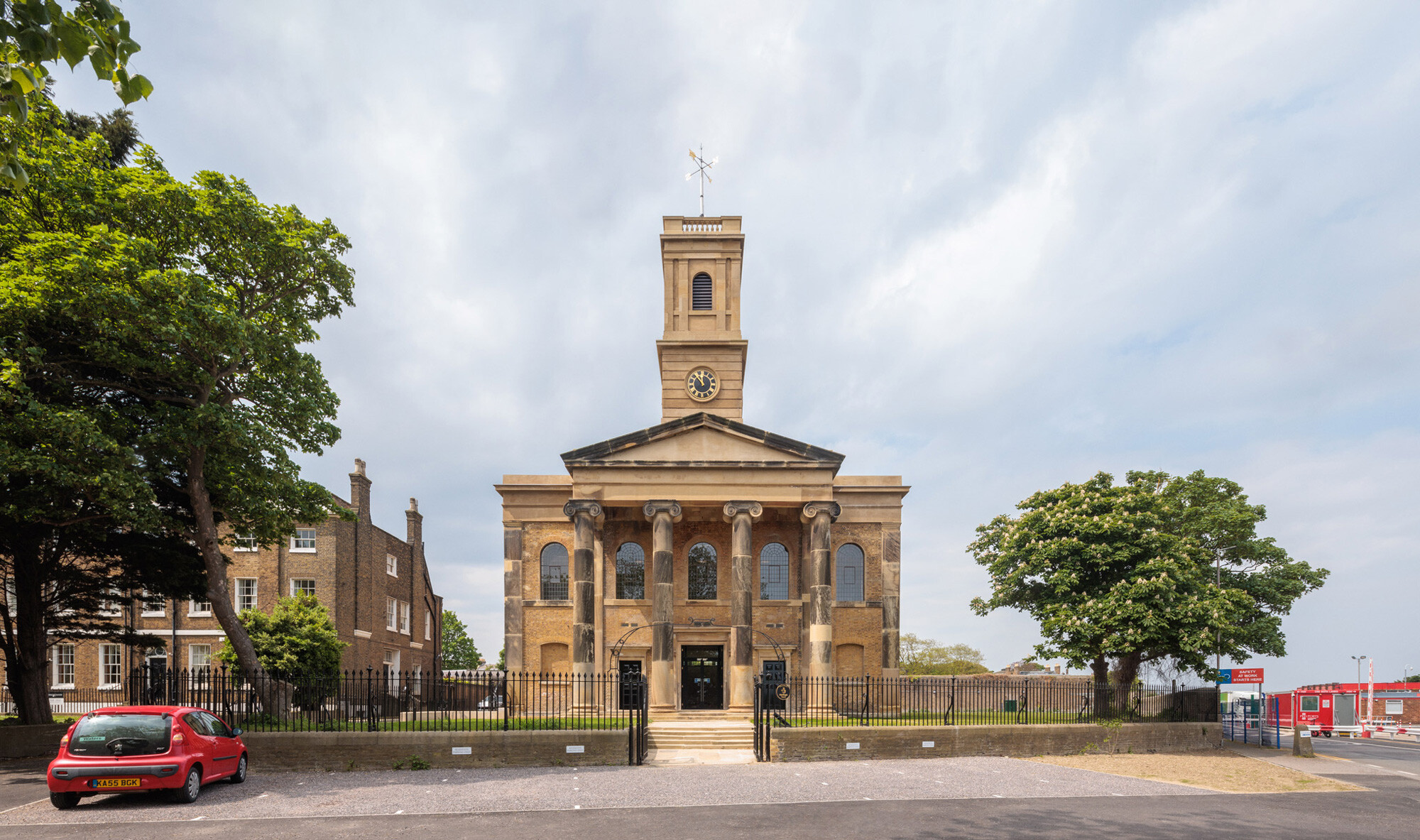
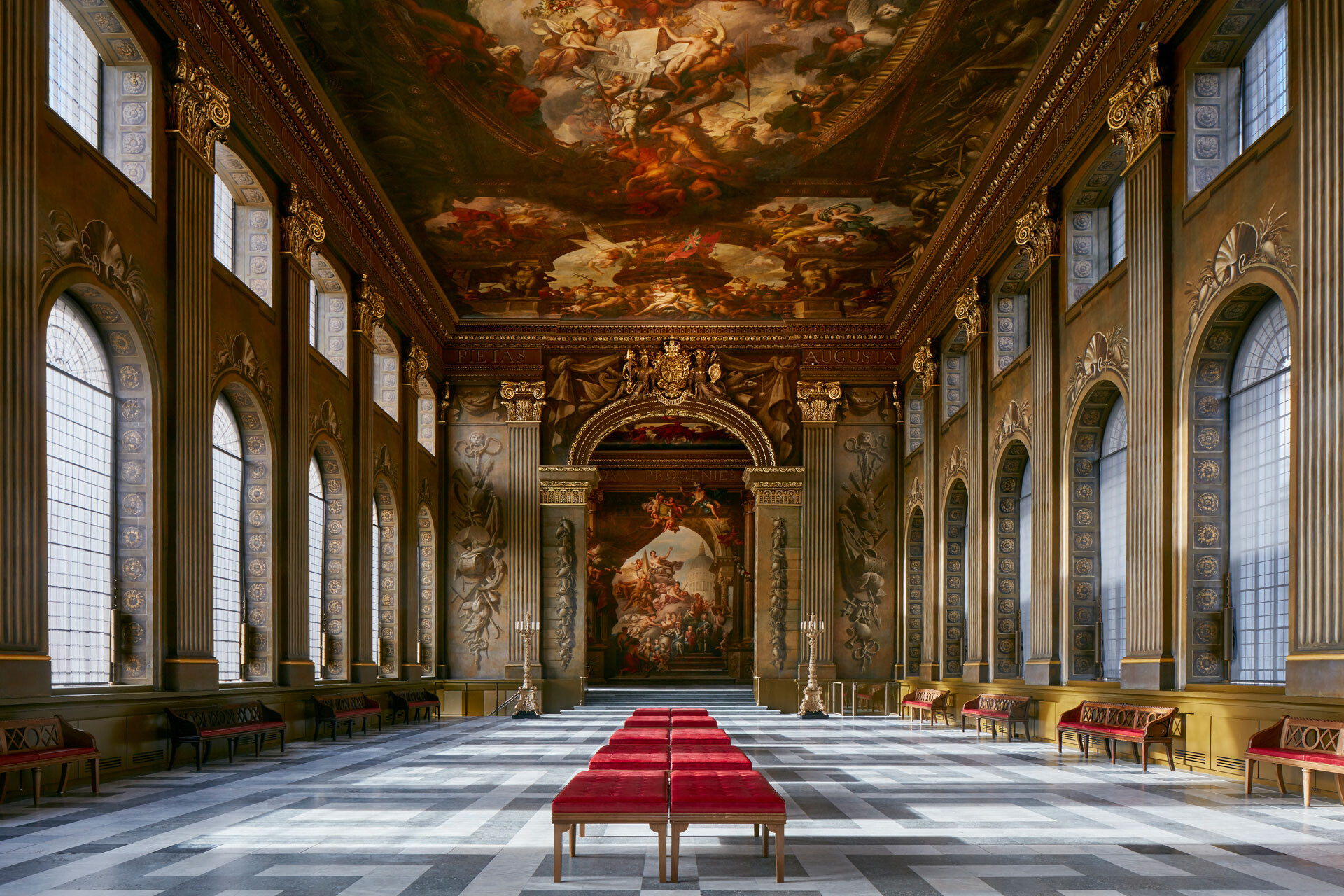
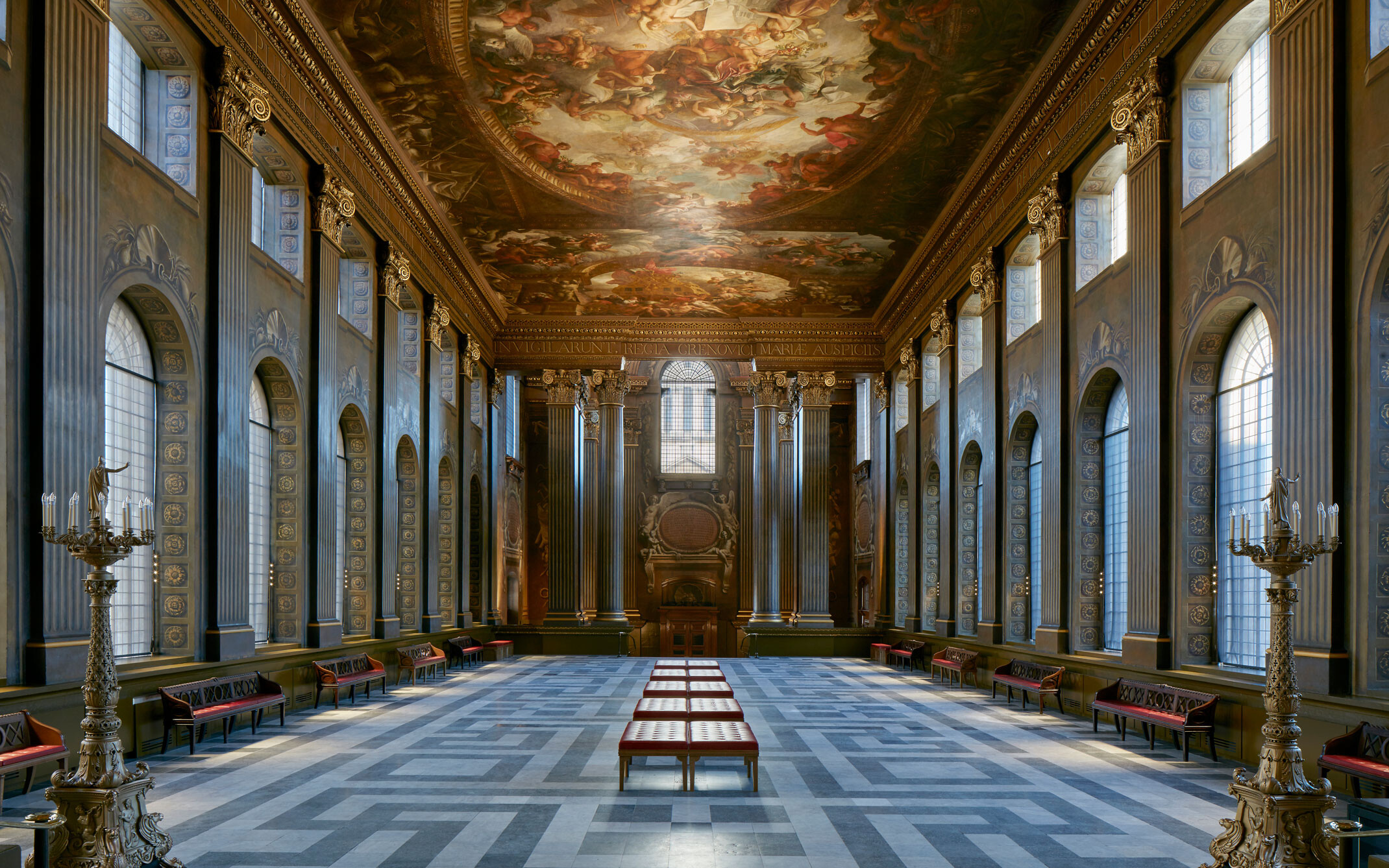
Our designs for the Painted Hall at the Old Royal Naval College (ORNC) in Greenwich combine environmental improvements with an exciting reimagination of the undercroft which transforms the visitor experience and helps protect Sir James Thornhill’s painted interior.
The Painted Hall is one of the architectural treasures within the Old Royal Naval College, designed by Sir Christopher Wren, with significant elements executed by Nicholas Hawksmoor, Sir John Vanburgh and Thomas Ripley.

Having previously worked with the ORNC on improving access, we were delighted to win the commission to help them meet the biggest challenge of all: to repair and prevent further deterioration of the paintings by Sir James Thornhill which decorate 3,700 sqm of its walls and ceilings, making it one of the most important painted interiors in Europe.
Extreme fluctuations in temperature and moisture proved the critical issue, much of it caused by the original entrance opening directly onto the Painted Hall. We proposed a new entrance sequence, using the vaulted undercroft designed by Hawksmoor.

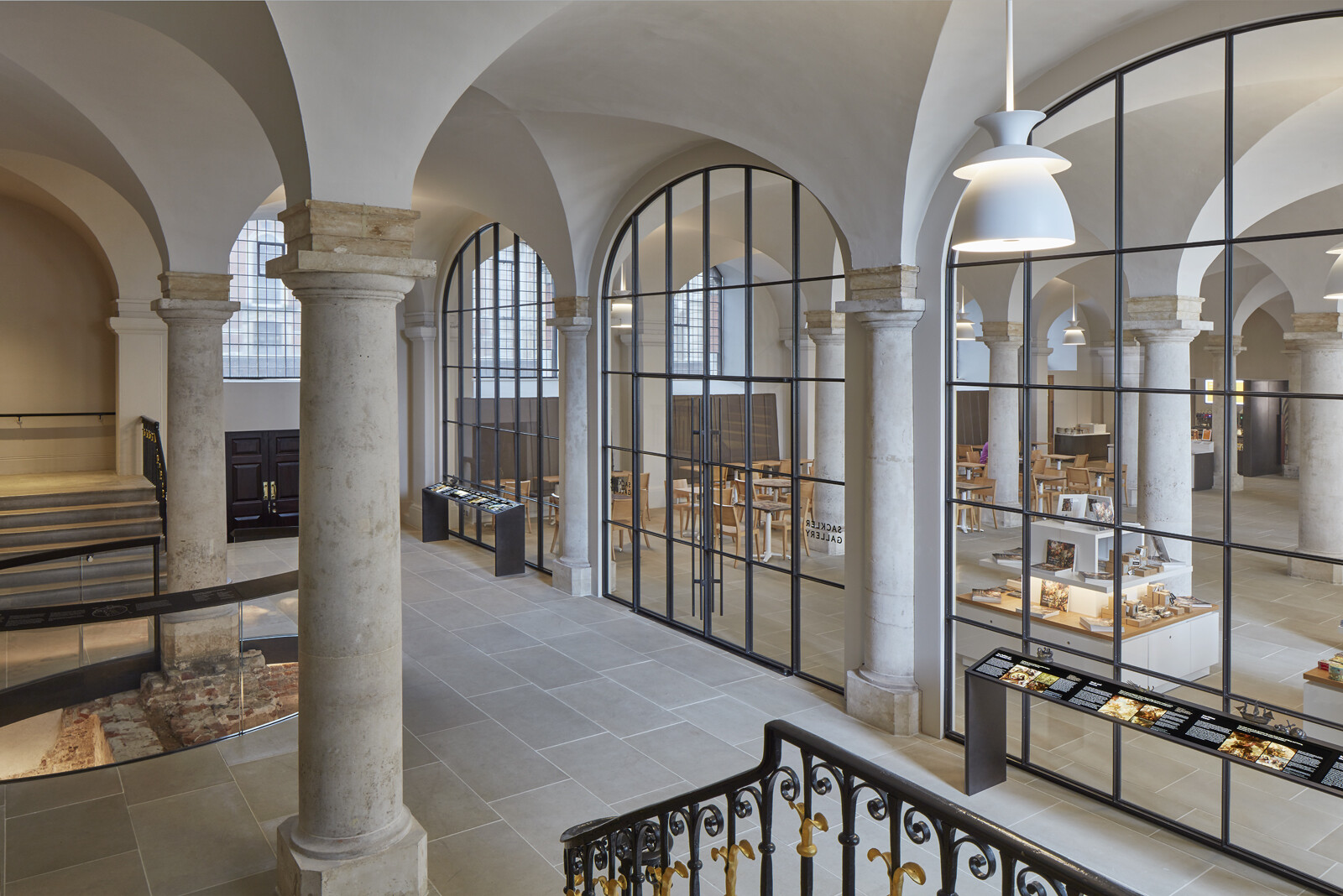
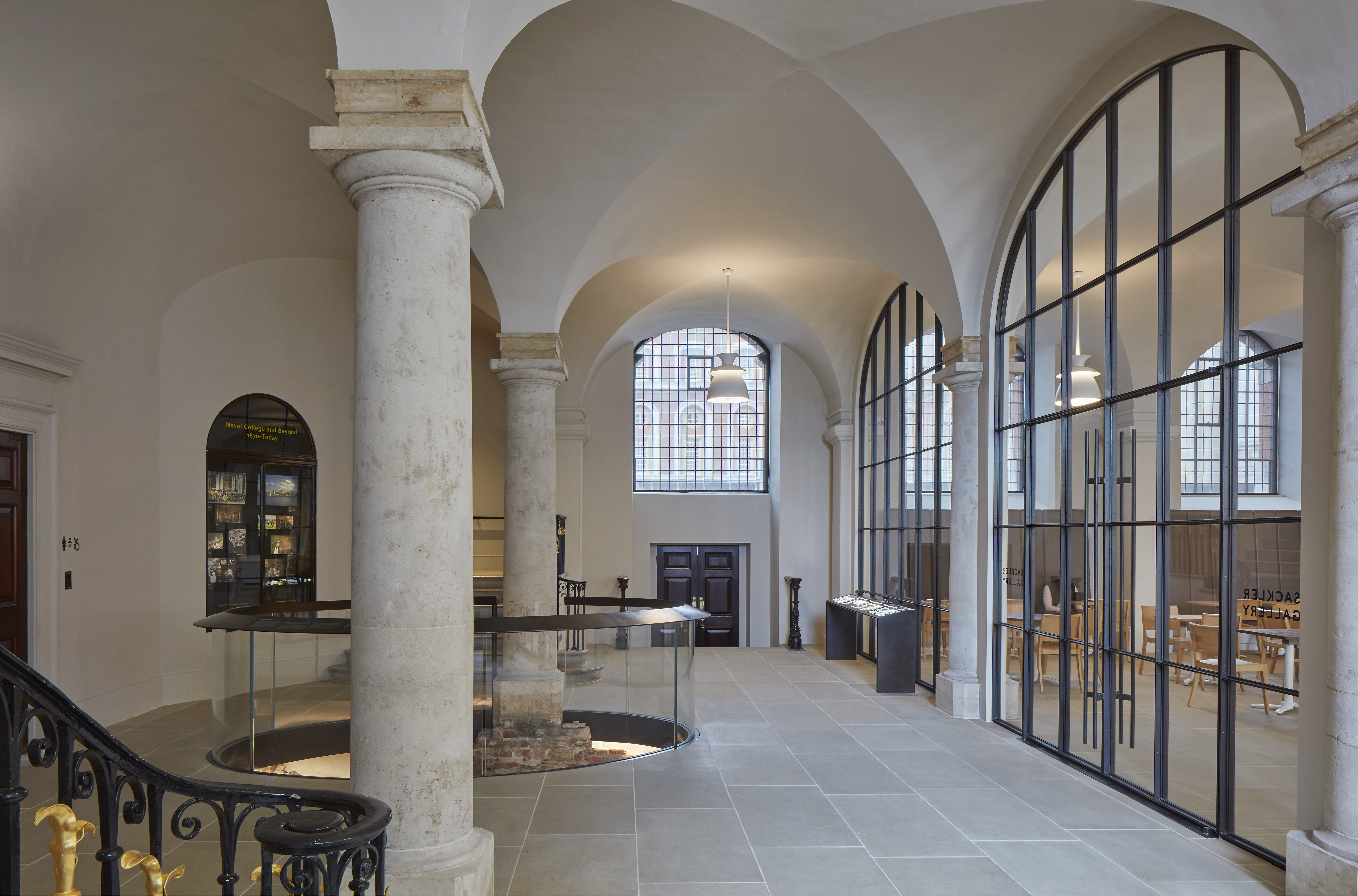
Opening up this undercroft allowed us to strip out late 19th and 20th century additions and insert a generous new café and kitchen, plus shop, all of which boosts vital revenues from visitors and events. Glazed screens with bronze frames maintain sightlines, comfort and daylighting in these retail and hospitality spaces, working in sympathy with surrounding materials whilst preventing unwanted moisture and temperature fluctuations from affecting the hall above.
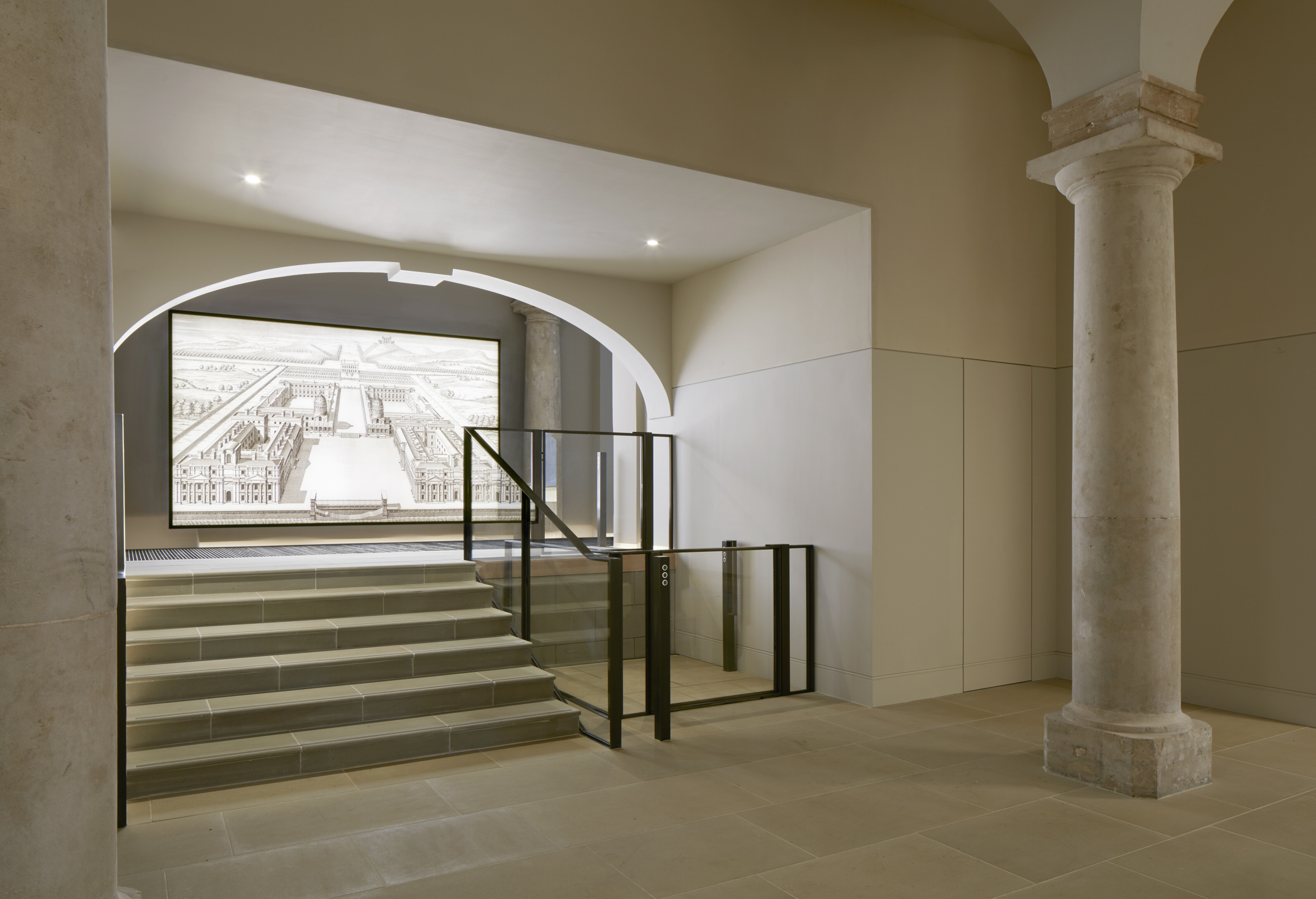

To stabilise and improve the environment within the hall, we implemented extensive draft proofing and solar shading of windows, and installed heating, lighting and audio systems, which were developed through extensive computer modelling.
We also designed scaffolding that would support the team of painting conservators who spent two and a half years cleaning and repairing the paintings as well as allow thousands of visitors – 85,000 in total – to experience the work up close, as part of public outreach initiatives.
-ornc,-credit-andrew-thompson-(4).jpg)
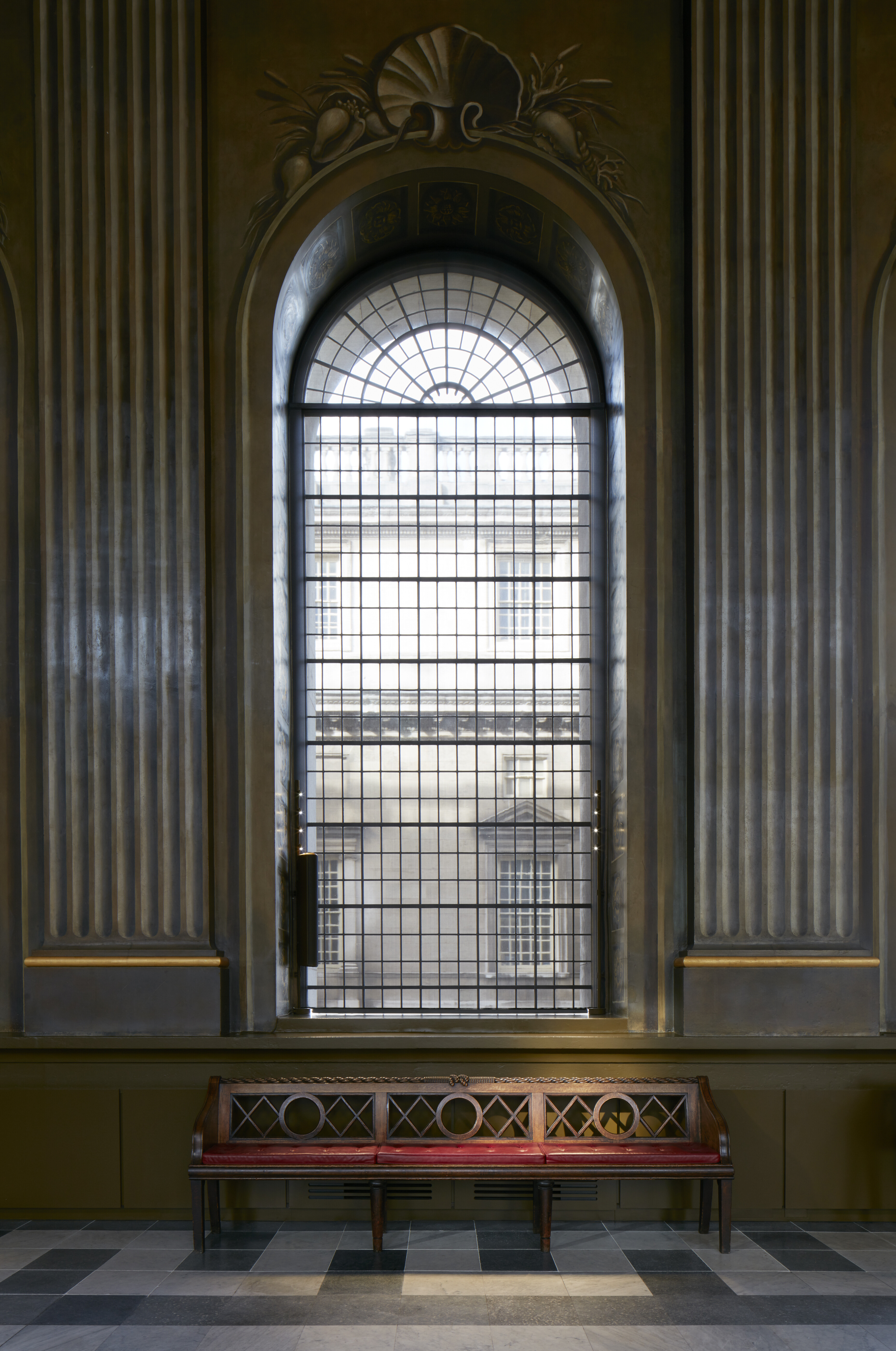
We introduced upholstered benches for reclining on, as well as mirrored tables along the hall’s perimeter, to allow visitors to admire the ceiling in comfort. New interpretation panels in the Undercroft foyer now place the site and its assets in context for better appreciation.
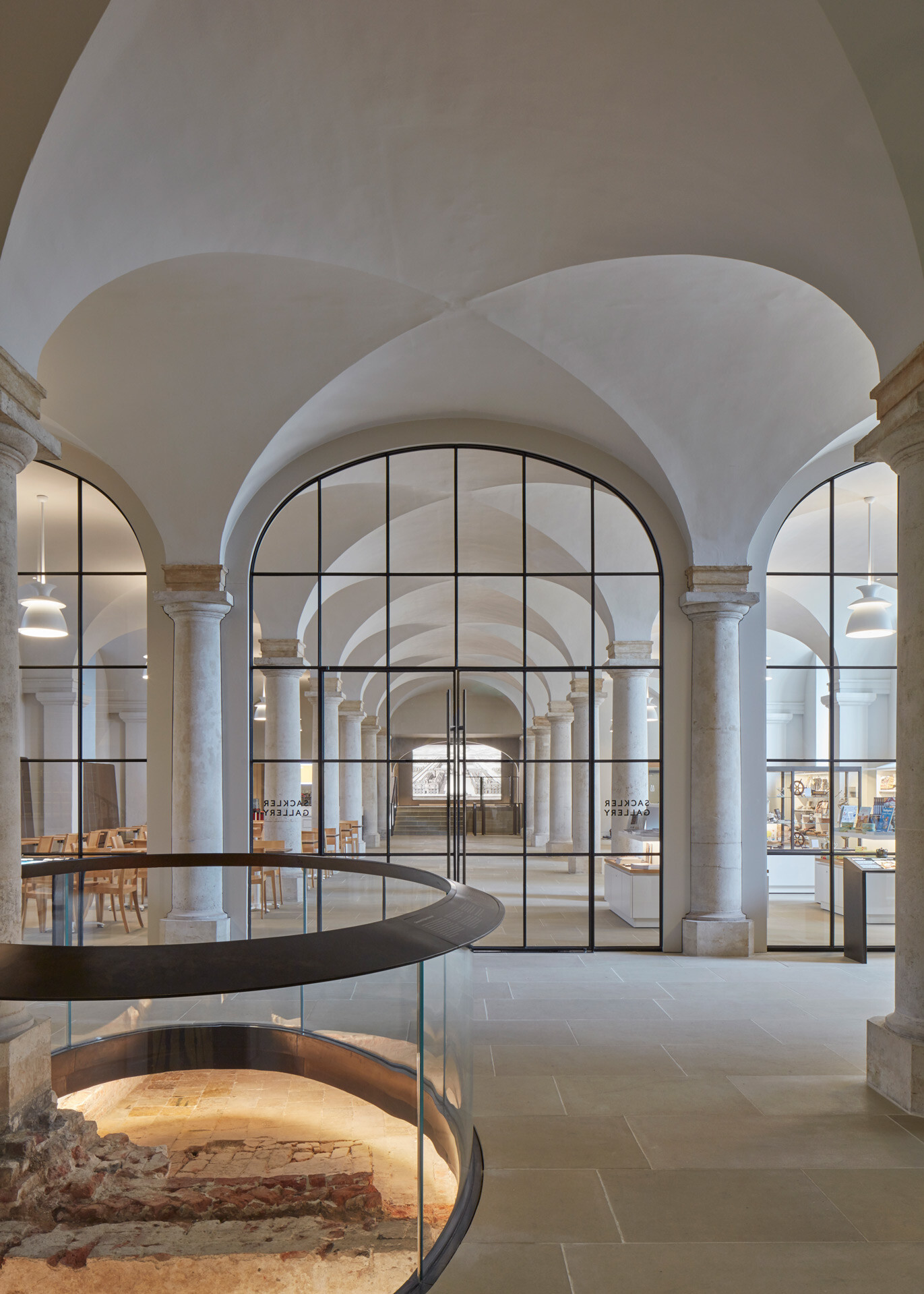
A further treasure was revealed while removing and replacing old floors - a section of Henry VII’s palace, which lies beneath the hall. It is now viewable, for the first time in over 300 years, thanks to an oval opening in the floor.
Process
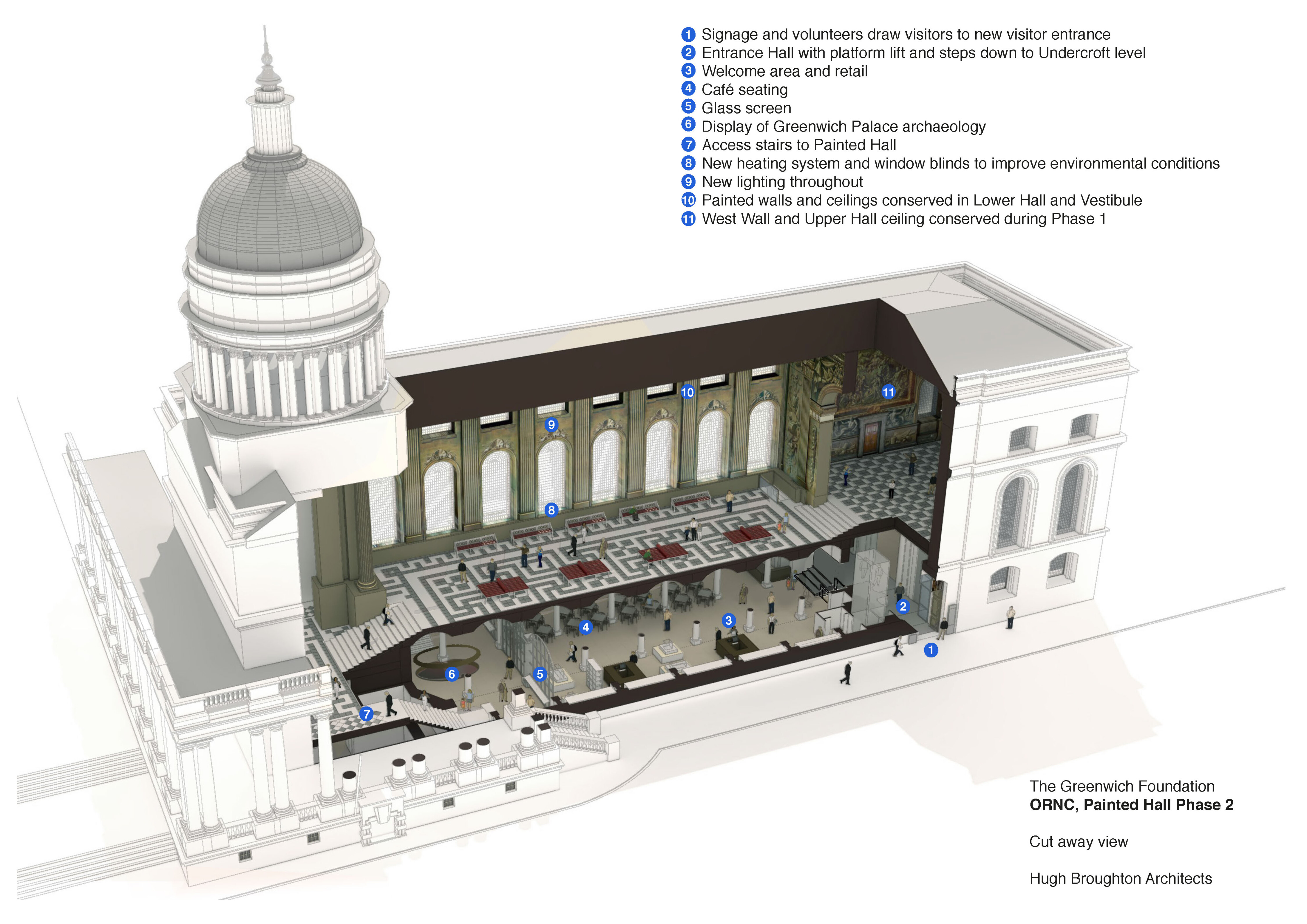
Cut-away isometric view
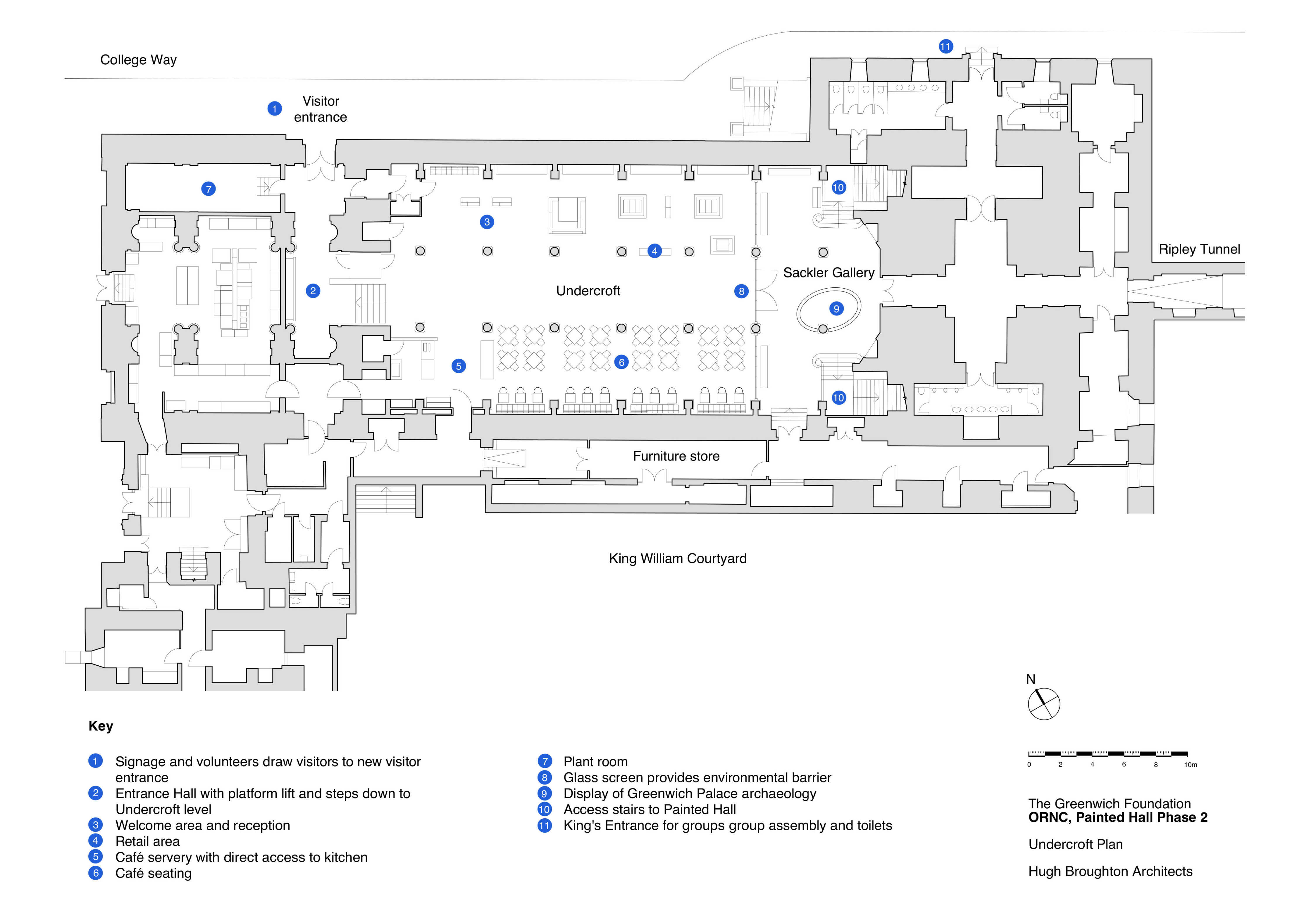
Undercroft plan
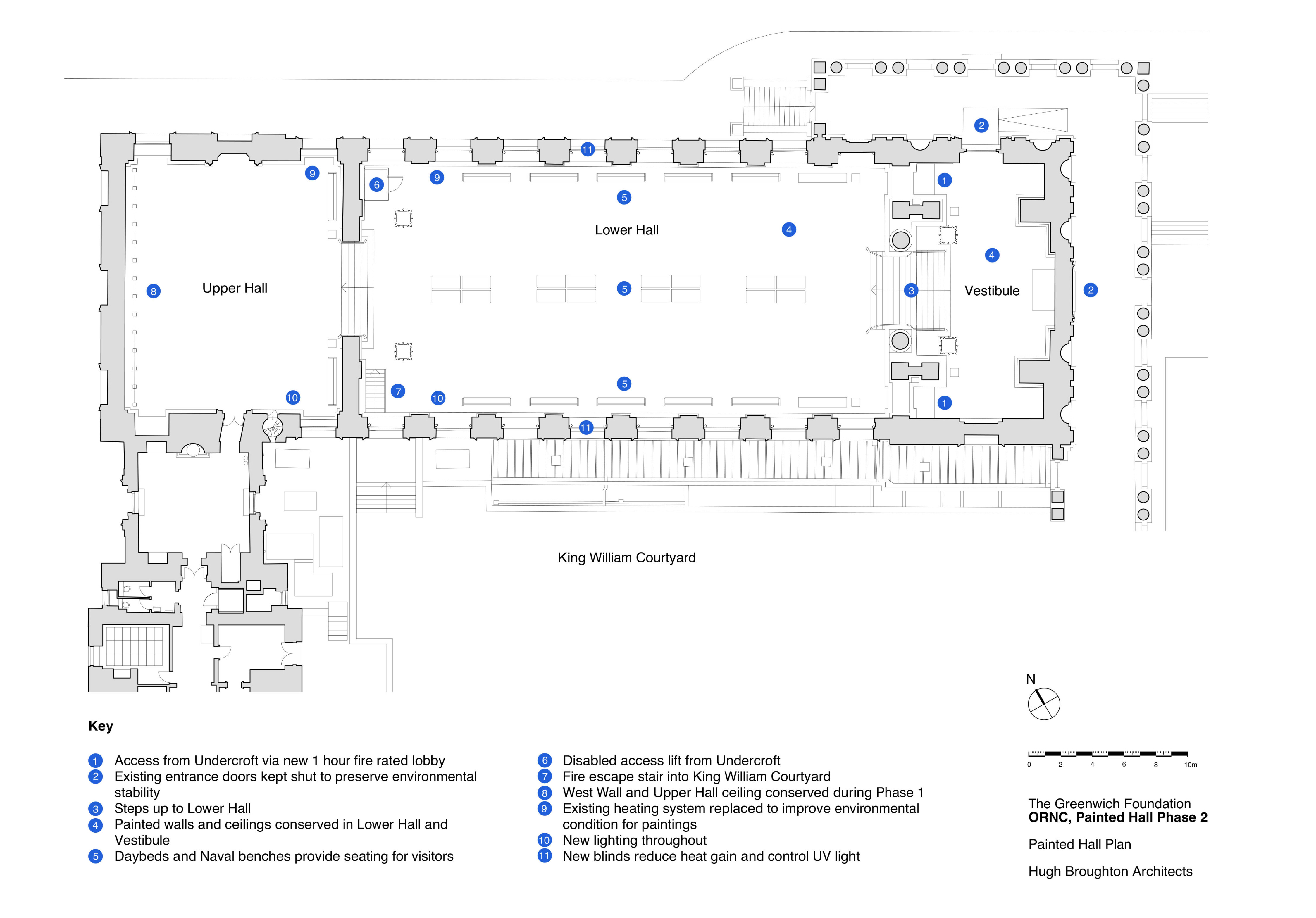
Painted Hall plan
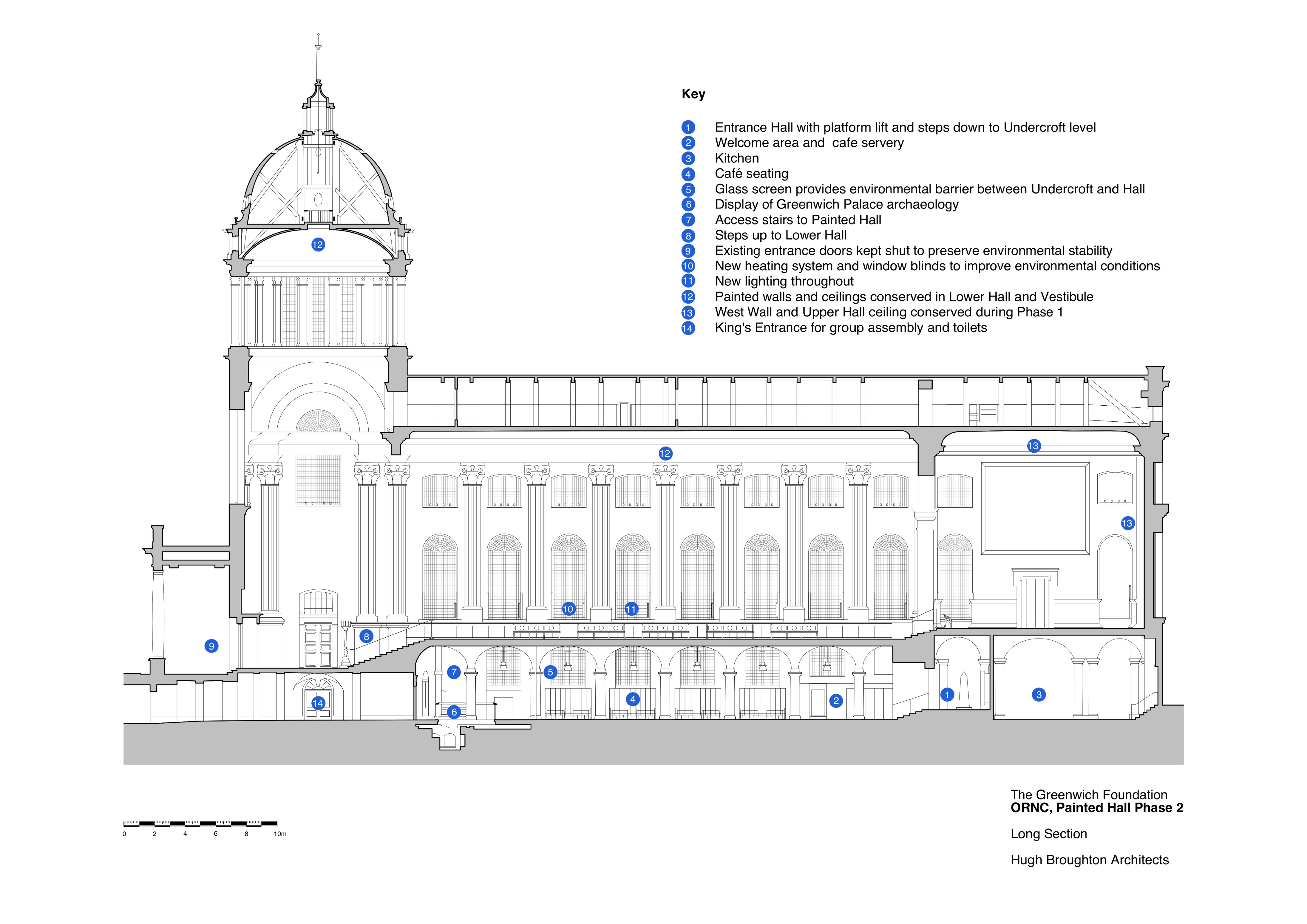
Painted Hall section