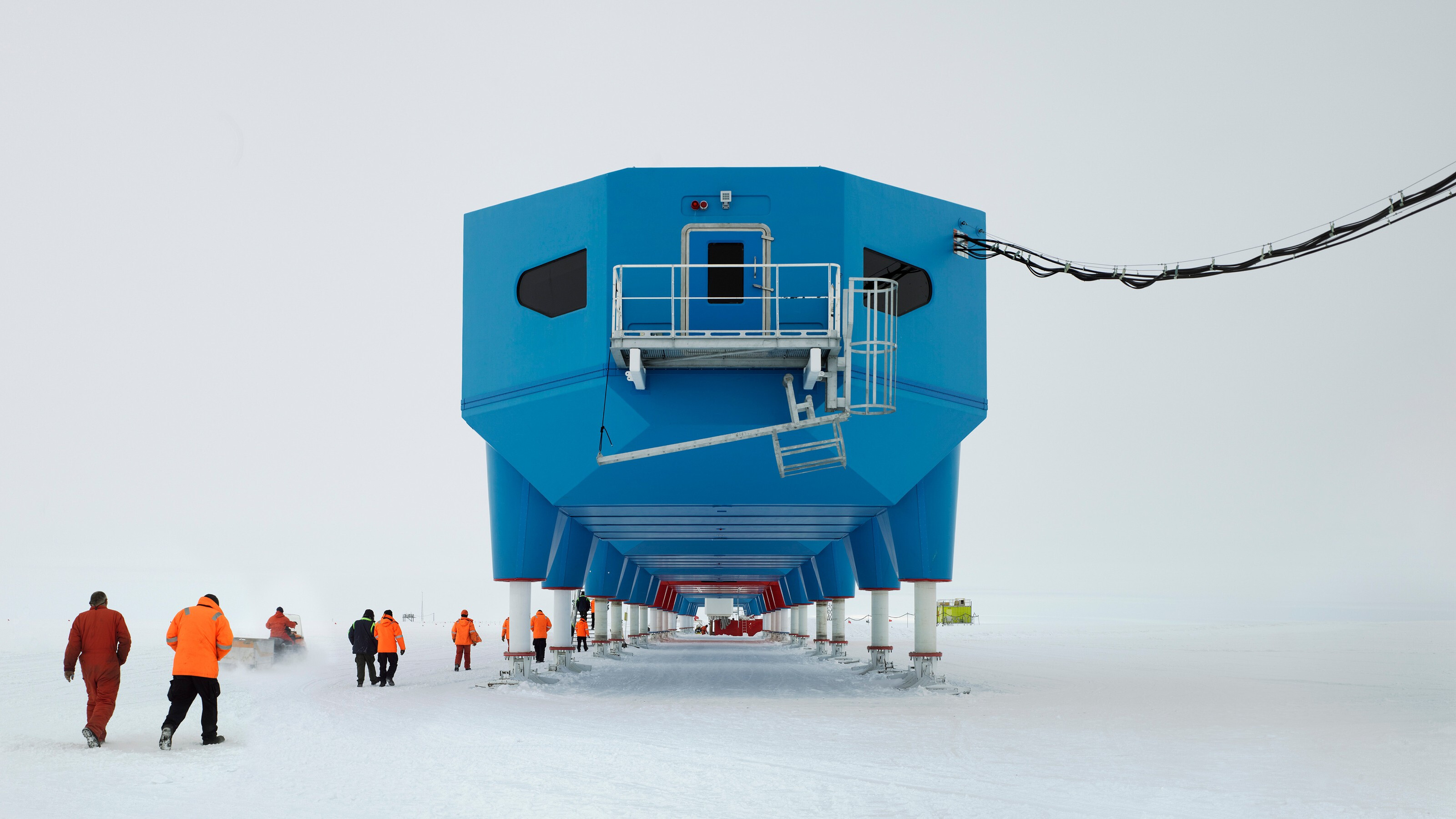
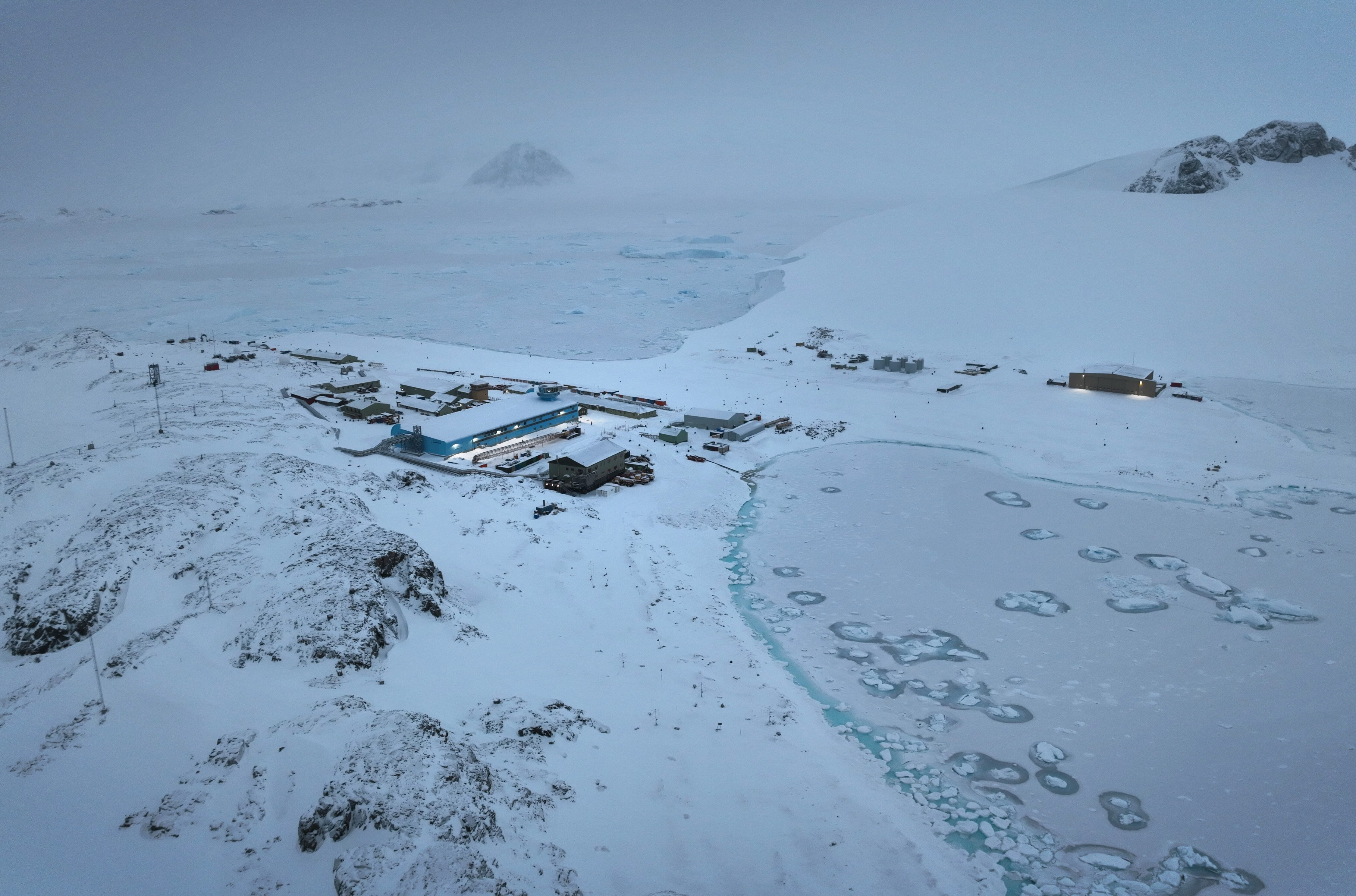
Located on a rocky promontory at the southern tip of Adelaide Island, Rothera Research Station is the British Antarctic Survey’s (BAS) largest year-round research facility and a vital hub for UK and international polar science. Occupied since 1975, the station supports a wide range of scientific disciplines, including biosciences, geosciences, glaciology and meteorology, while also serving as a major logistics centre for BAS operations across Antarctica.
As part of the Antarctic Infrastructure Modernisation Programme (AIMP), we are working within the Antarctic Construction Partnership alongside BAM and Sweco, with Ramboll and their partners Norr and Turner & Townsend acting as technical advisers. Central to this multi-year upgrade is the Discovery Building, a new science and operations facility that consolidates multiple specialist functions previously housed in ageing, inefficient structures that had reached the end of their operational life.
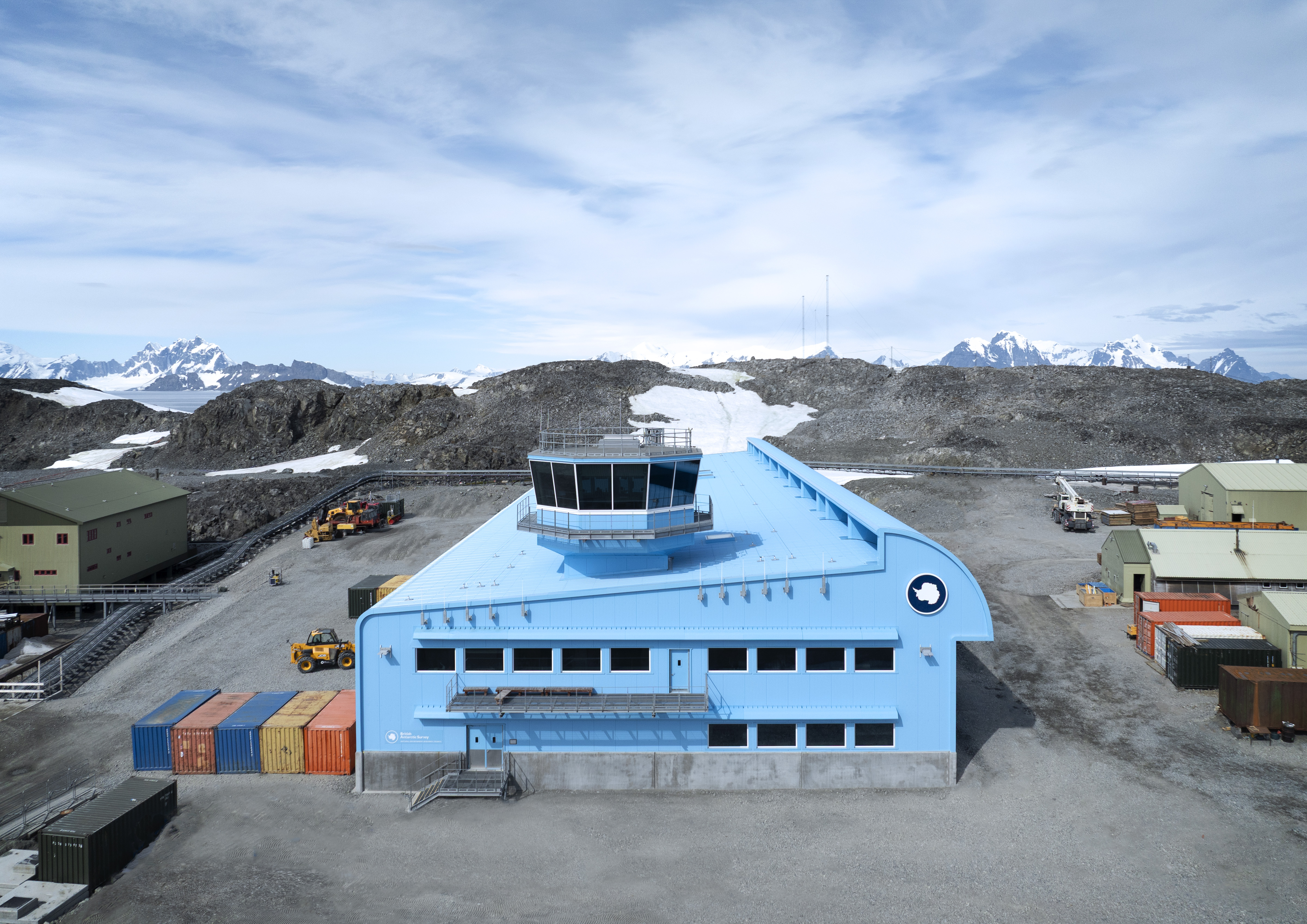
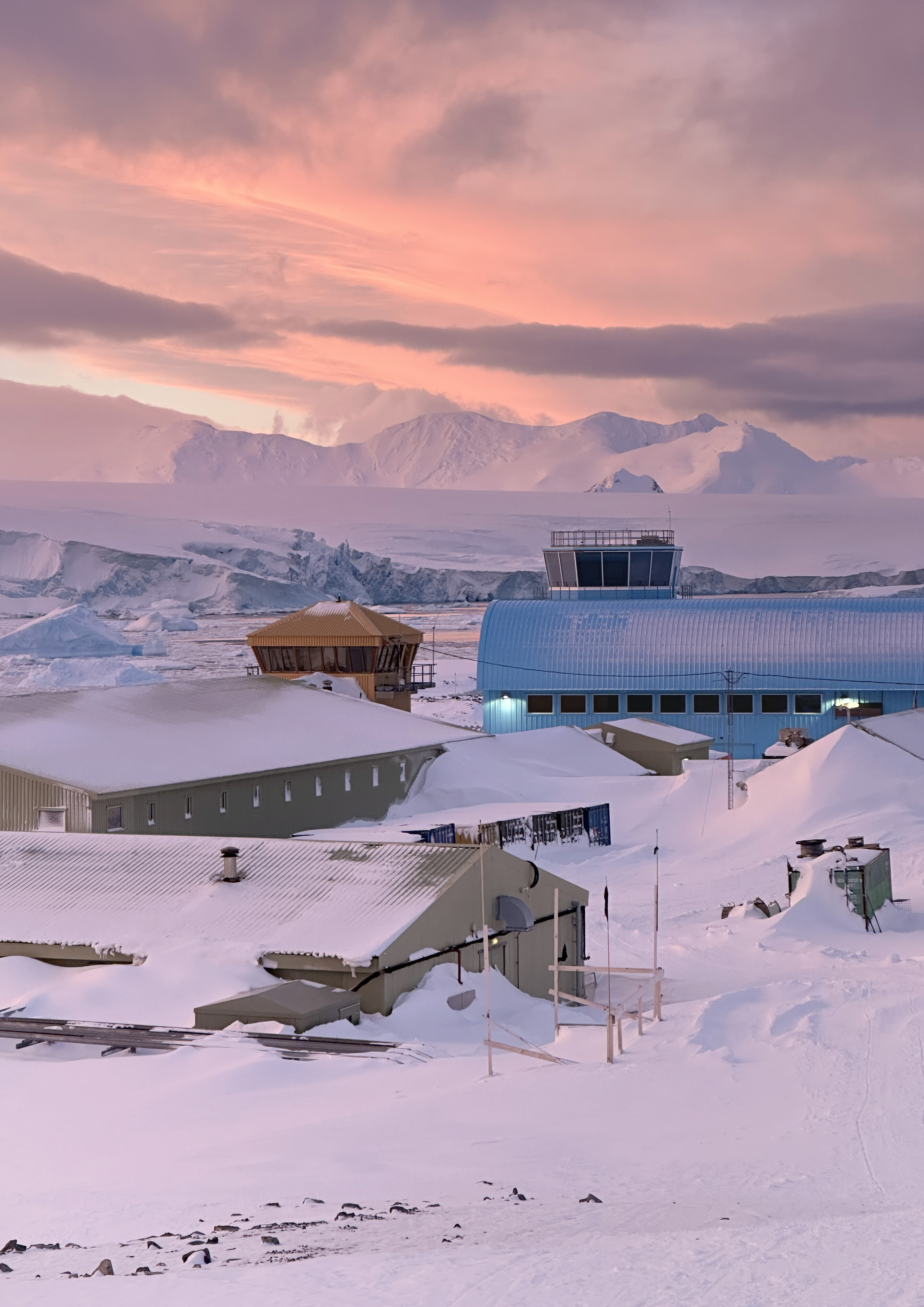
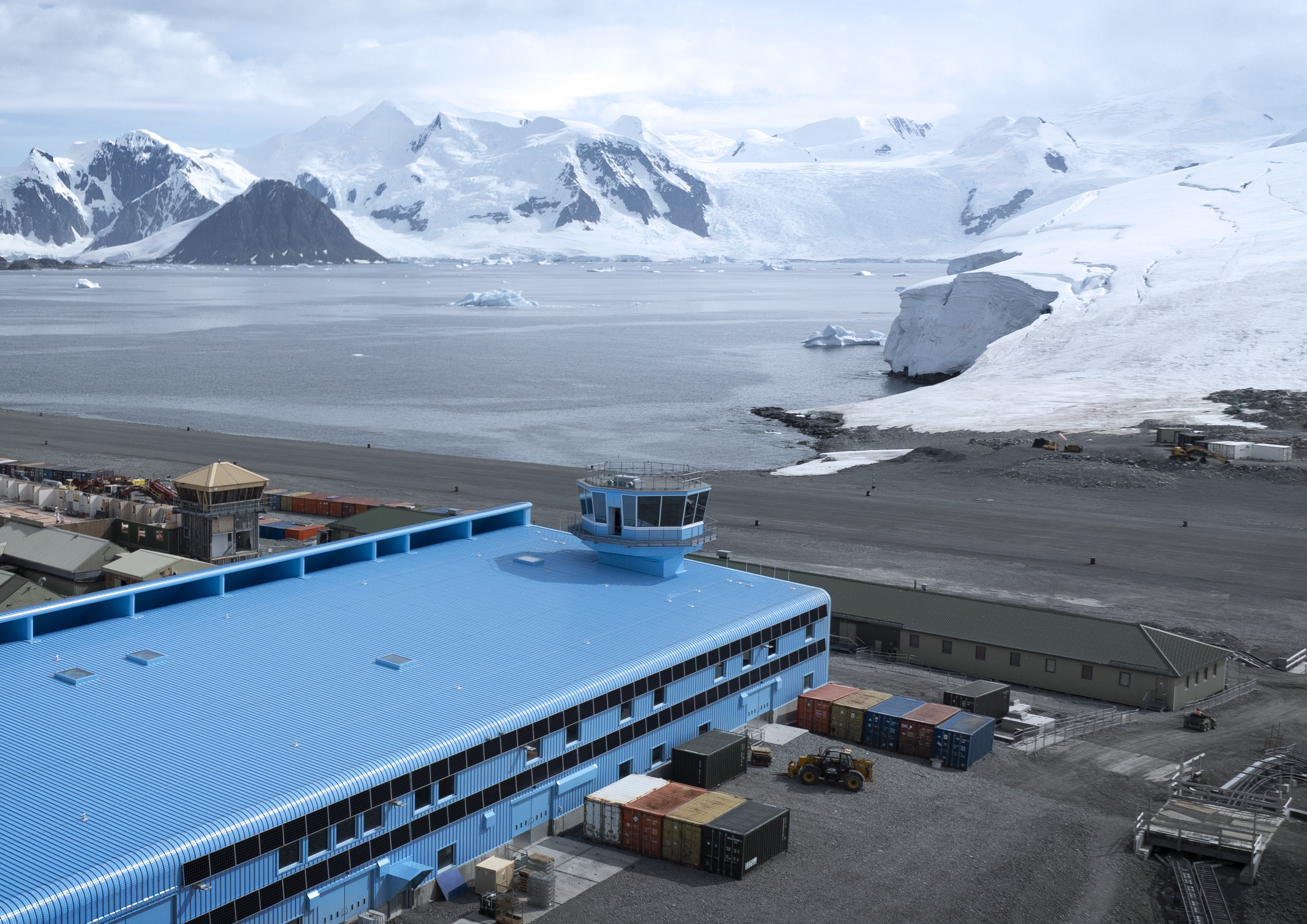
Completed in 2025, the two-storey, 4,500 sqm Discovery Building represents a new architectural landmark for Antarctica and sets a benchmark for resilient polar design. Drawing on our extensive experience working in the Polar regions, the building is carefully oriented to the prevailing wind and incorporates a pioneering full-scale wind deflector. The first of its kind in Antarctica, this innovation accelerates airflow down the leeward side of the building, dramatically reducing snow accumulation and long-term maintenance demands.
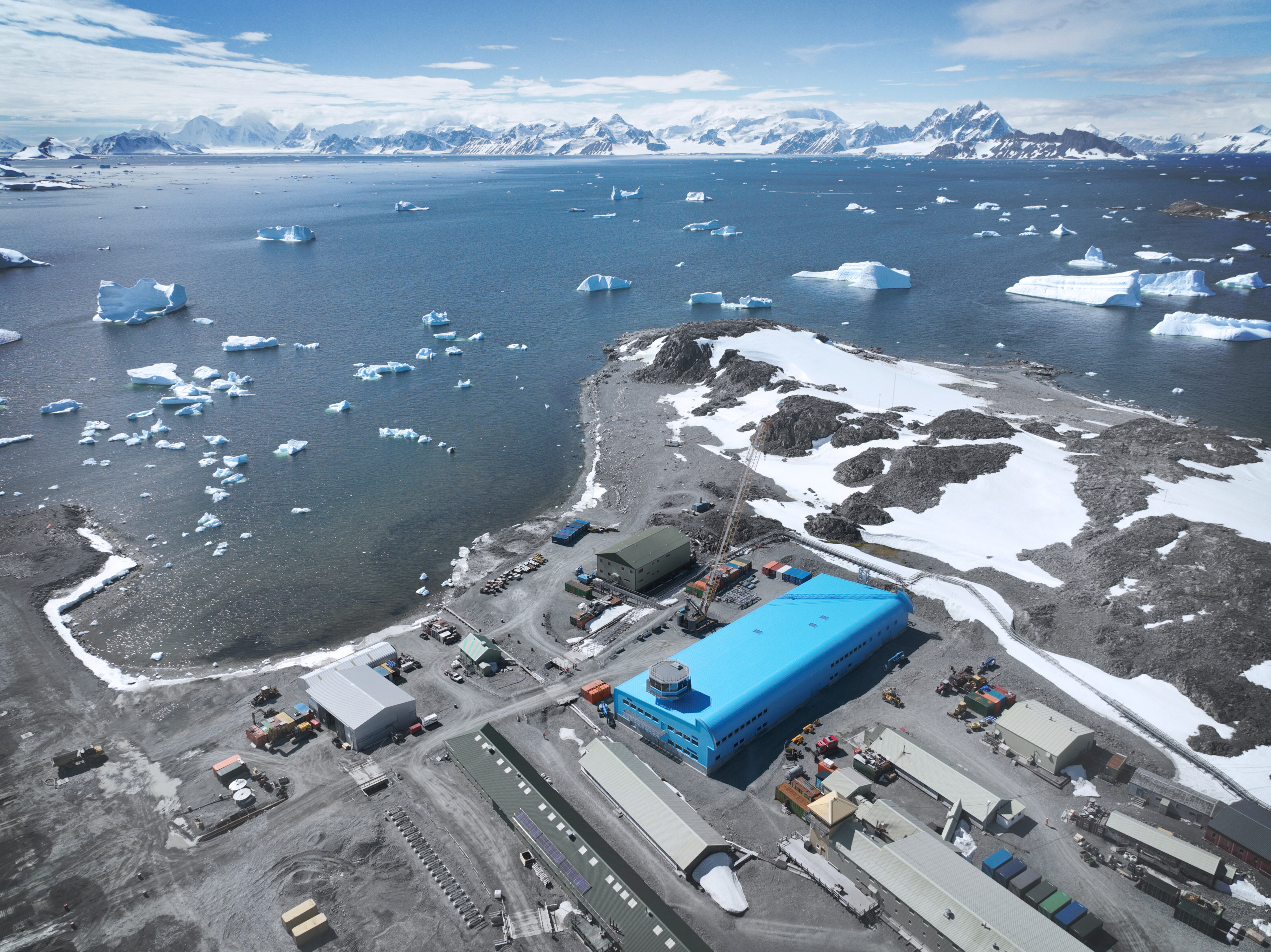
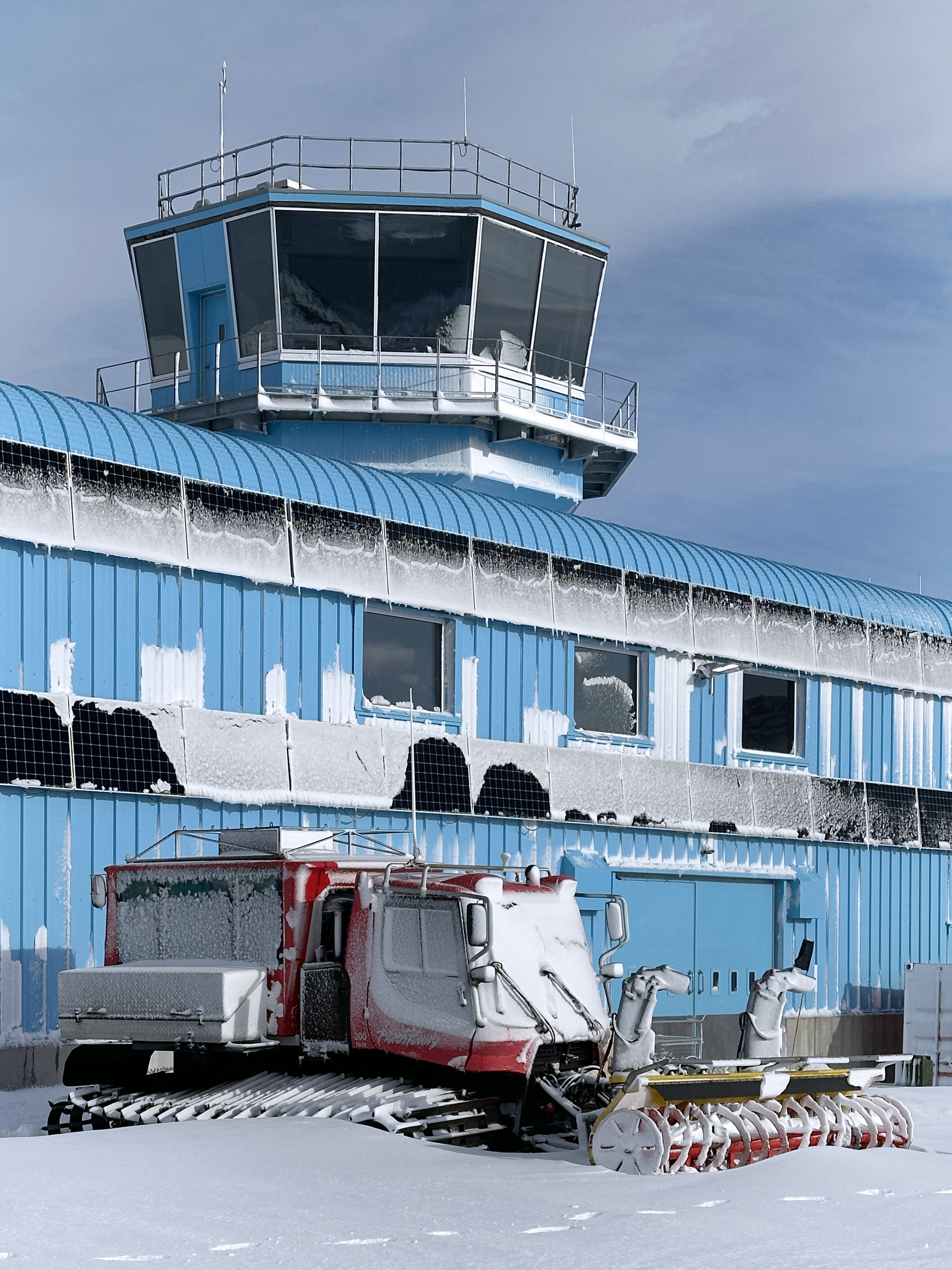
The building’s pale blue envelope, inspired by the Antarctic sky and designed to withstand high UV exposure, is formed from highly insulated composite panels and triple glazing to deliver exceptional airtightness and thermal performance. A panoramic control tower rises above the monopitch roof, providing 360-degree views across the runway, wharf and station.
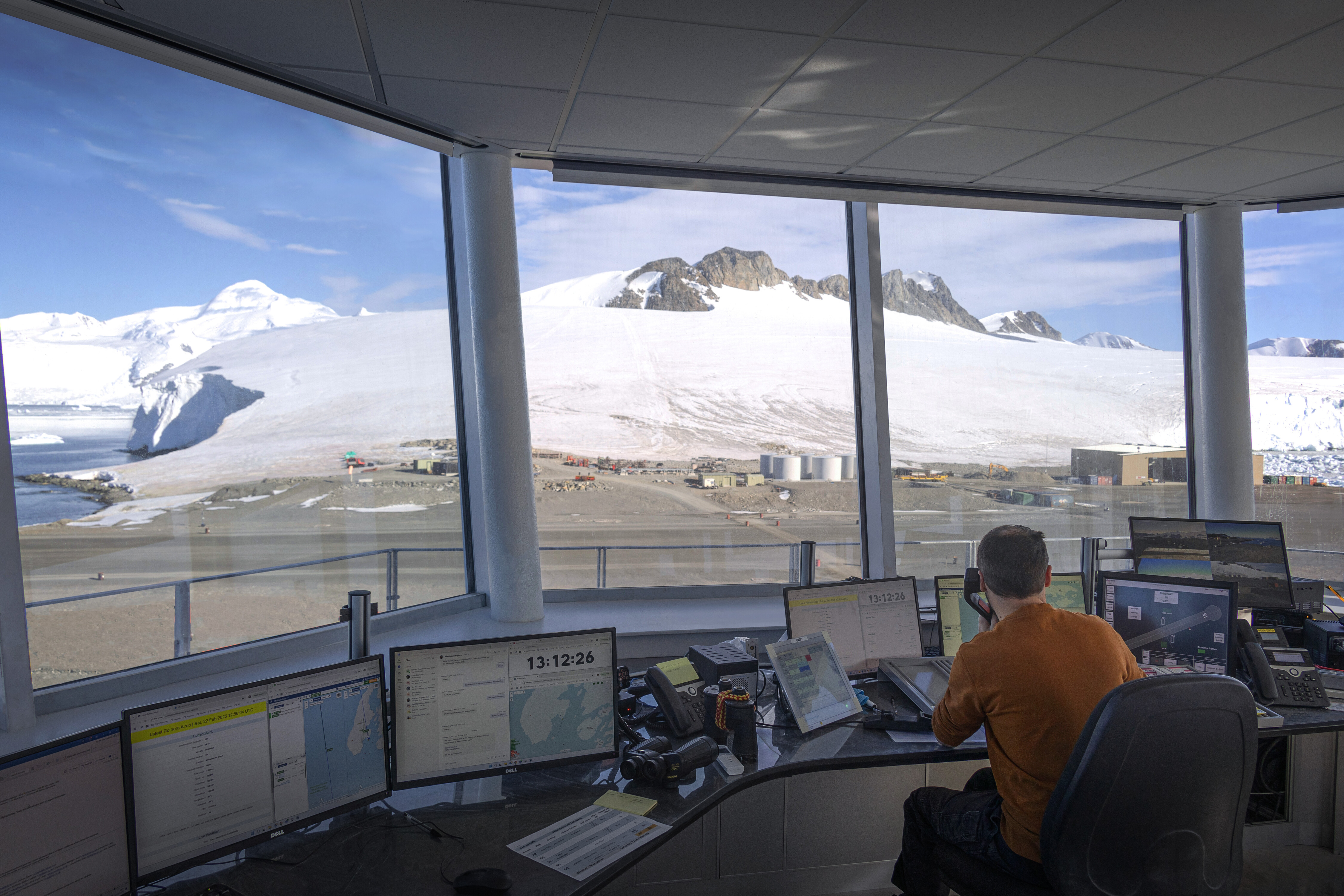
Internally, the Discovery Building brings together preparation areas for field expeditions, workshops, medical facilities, offices, recreational spaces, a central store and critical plant services. Vibrant colours, roof lights and open-plan collaboration areas enhance wellbeing, support team cohesion and help mitigate the effects of long polar winters. Transparent internal glazing enables passive monitoring, supporting health and safety for the small winter crew, while robust, proven technologies ensure reliability in the harsh Antarctic climate.
Environmental stewardship has been integral to the project. Designed in accordance with BAS sustainability policies and a bespoke BREEAM accreditation developed specifically for Antarctic conditions, the Discovery Building is NERC’s first BREEAM-certified project in Antarctica. The modernisation significantly reduces energy consumption, water use, maintenance requirements and snow-clearance demands, securing a more resilient and sustainable future for Rothera Research Station and reinforcing its role as a centre of excellence for polar science and international collaboration.
Process
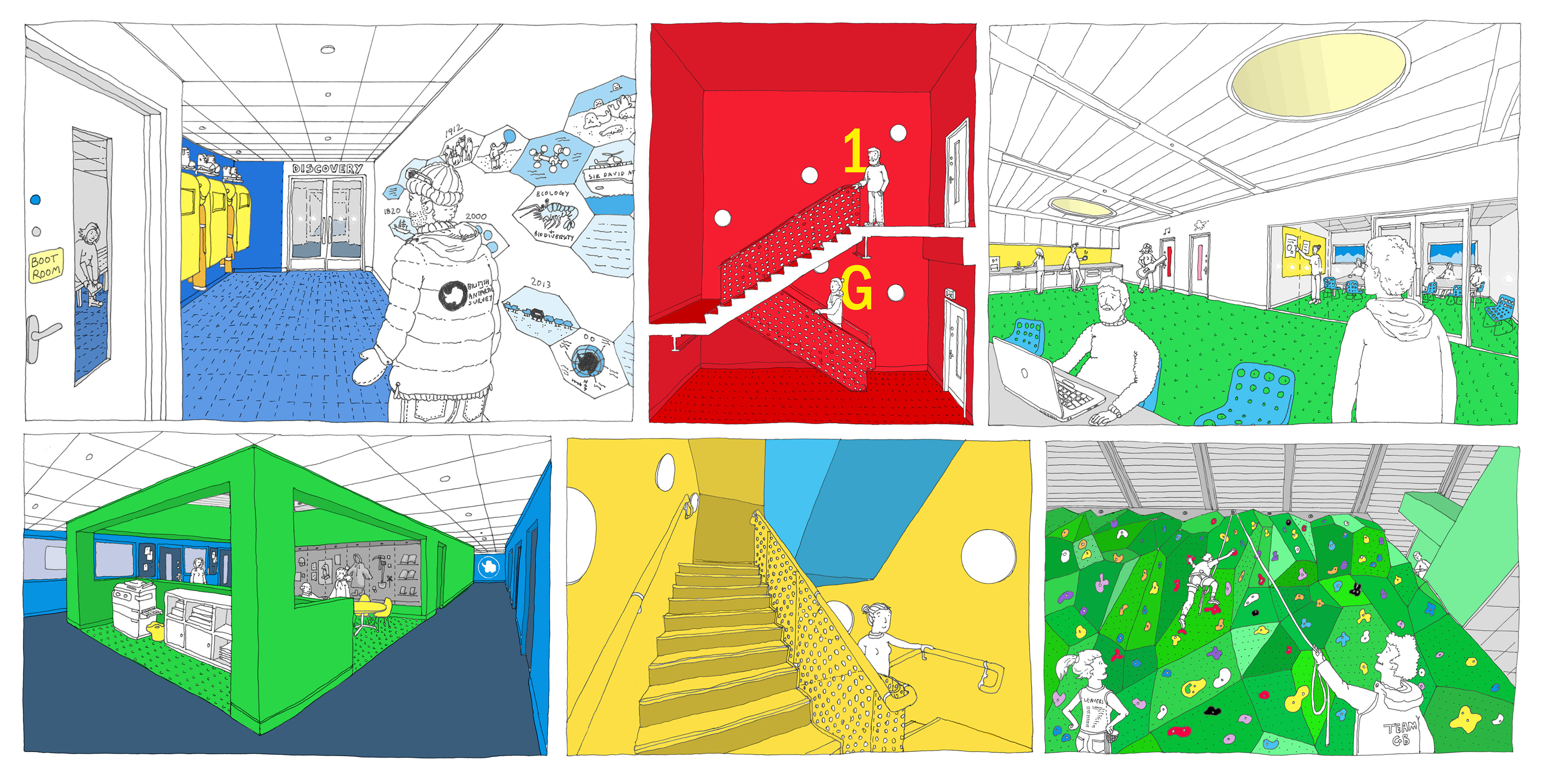
Colourful interiors are designed to support wellbeing
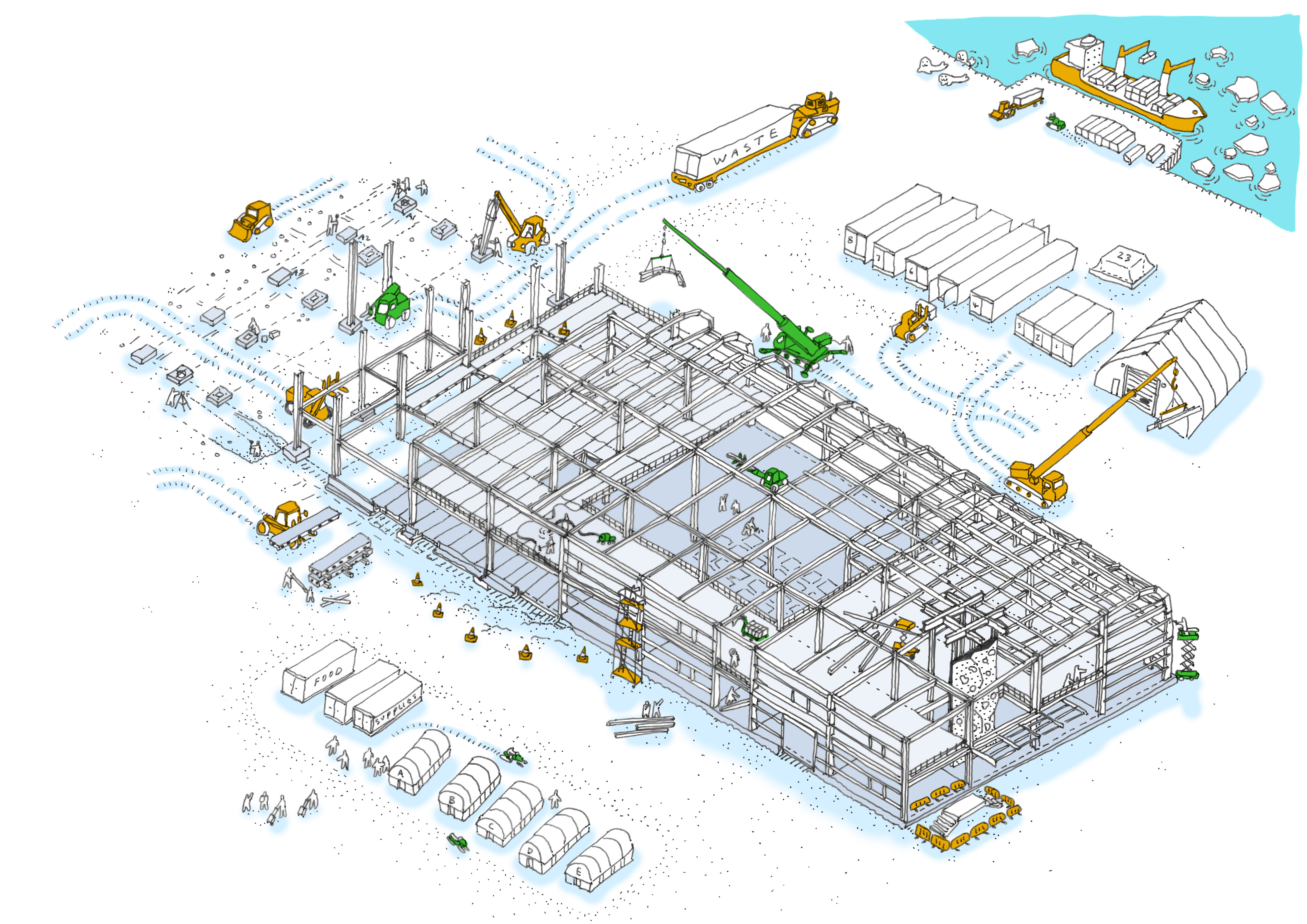
Construction seasons 1 + 2
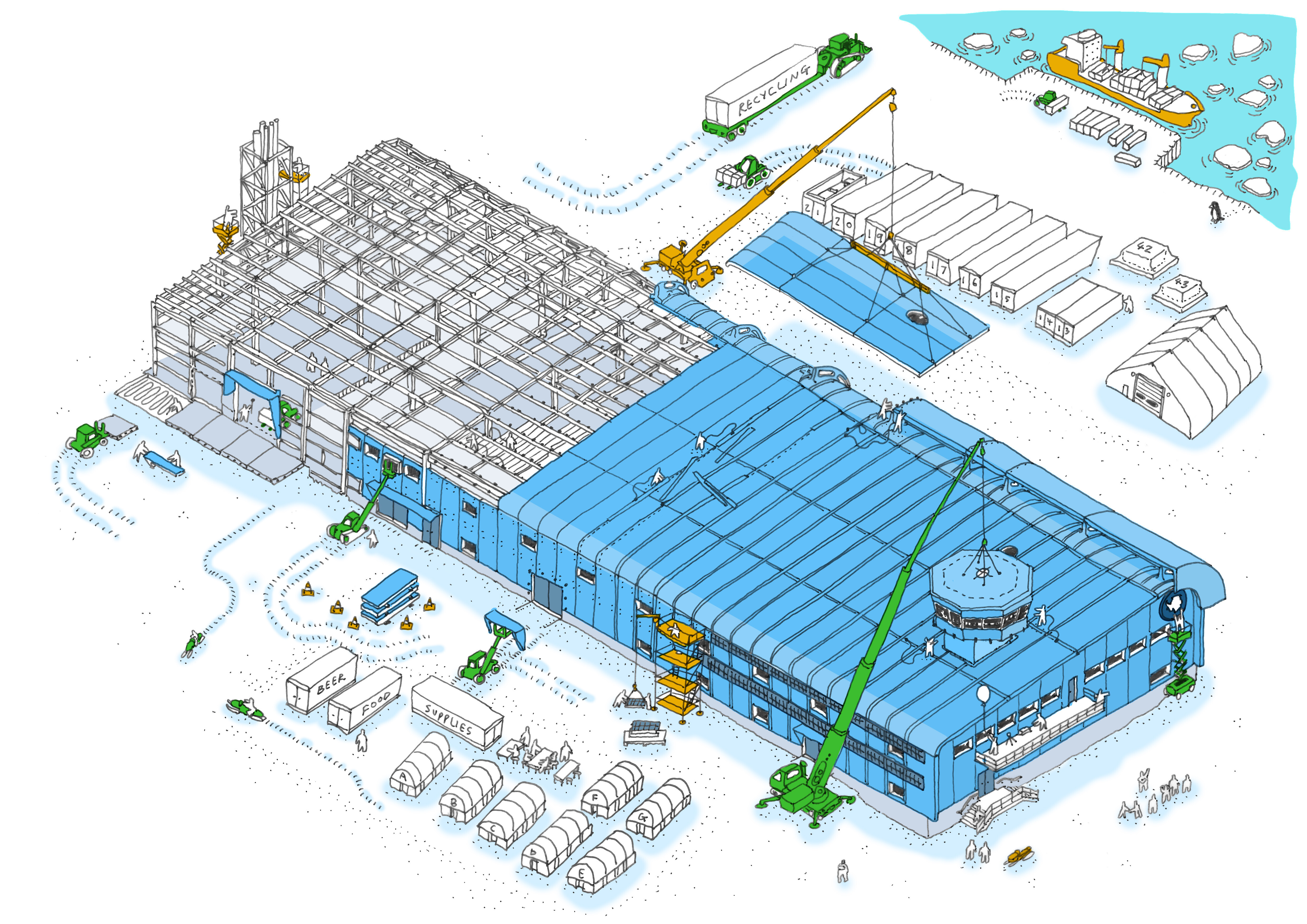
Construction seasons 3 + 4
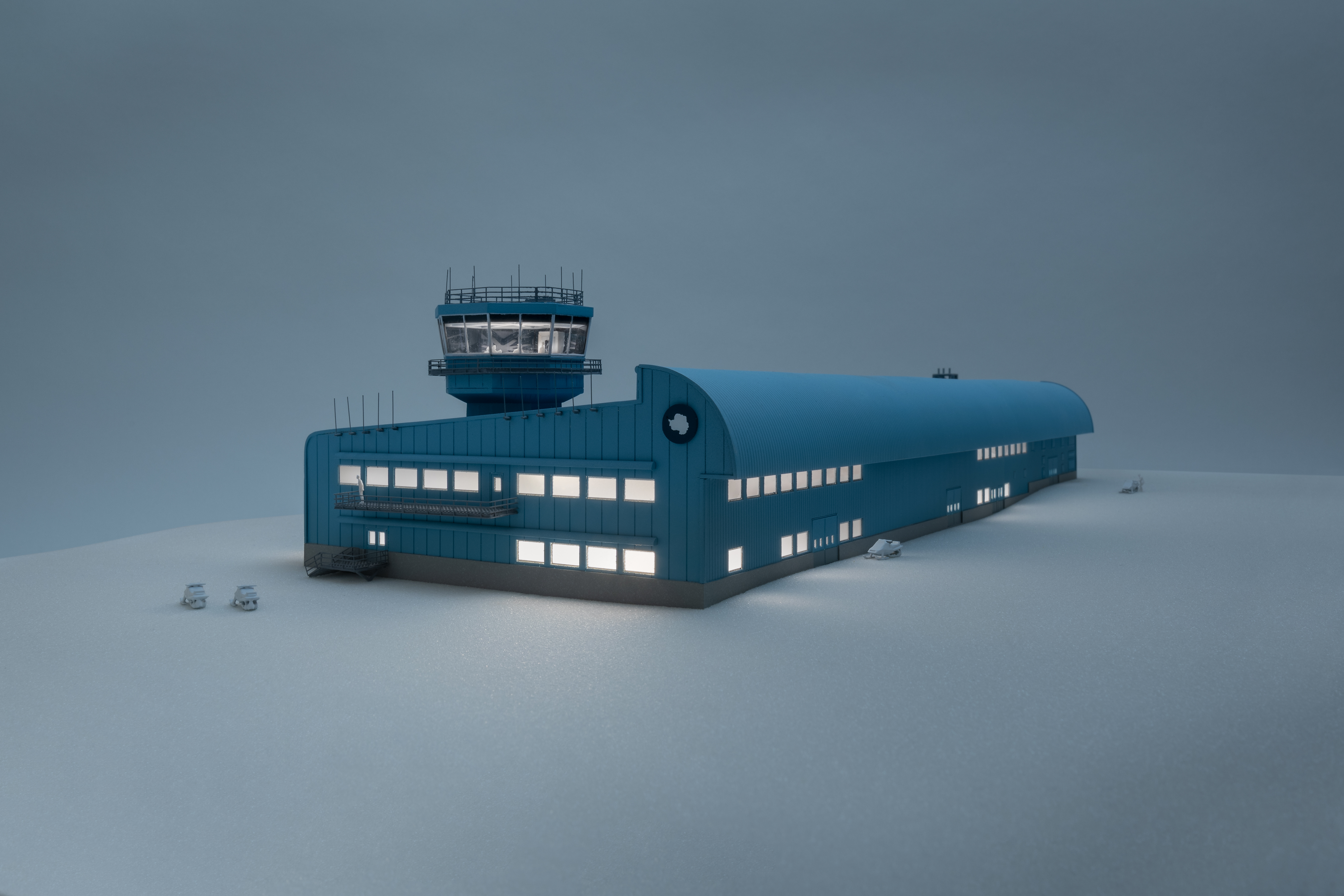
Architectural model
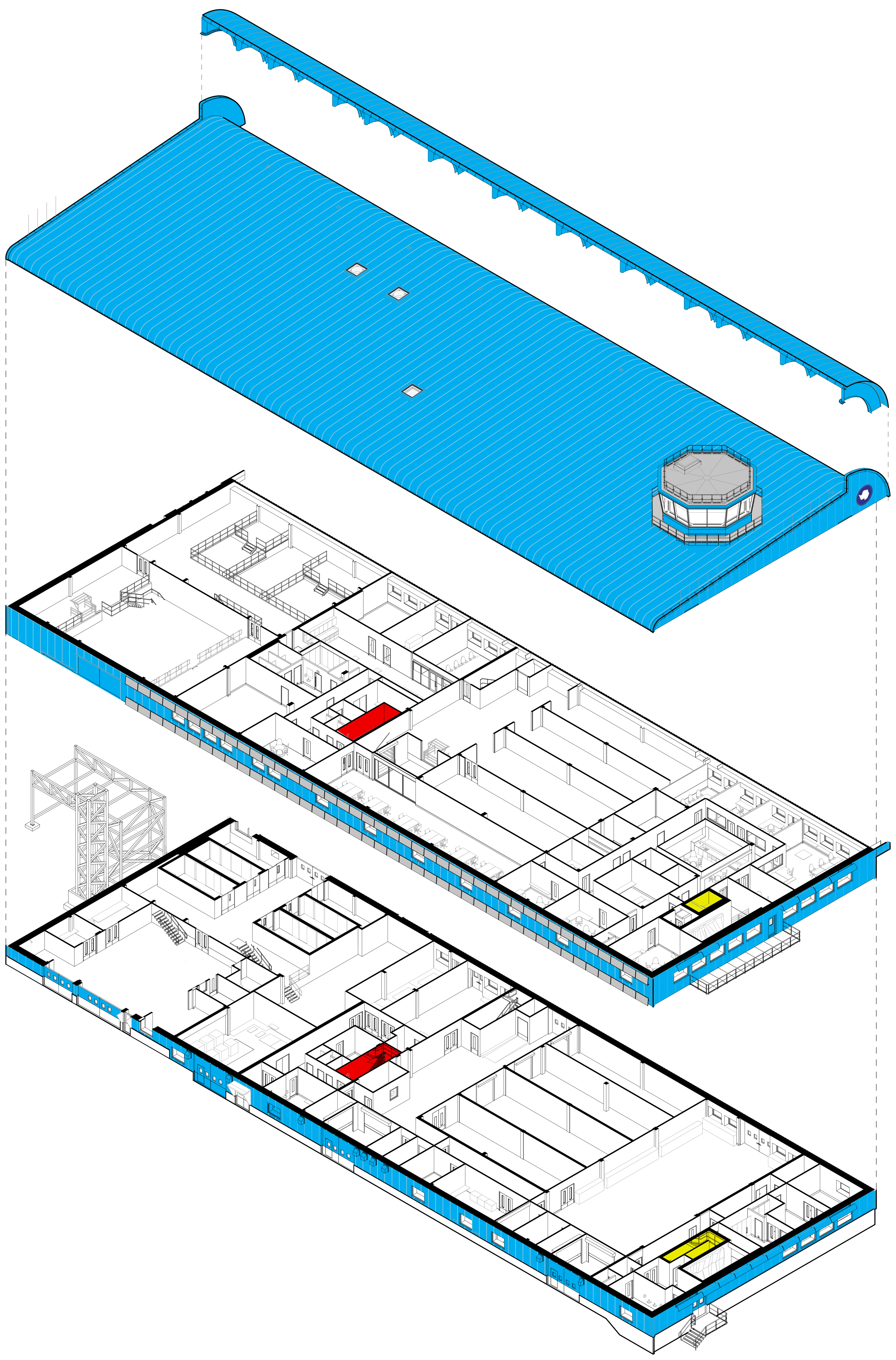
Exploded axonometric view